Sep 14, 2026Services Overview
Can Paper Bags with Handles Be Reused Multiple Times?
Discover whether paper bags with handles can be reused multiple times. Learn how bag quality, weight capacity, moisture, and proper handling affect durability and reuse for shopping and gifting.
Can Paper Bags with Handles Be Reused Multiple Times?
Disposable shopping bags often tear on the first walk home, leaving buyers frustrated. Many people assume all paper bags belong directly in the recycling bin after one single outing.
Yes, paper bags with handles can be reused multiple times if made from heavyweight kraft paper (120+ GSM), fitted with reinforced handle patches, kept away from moisture, and loaded within safe weight limits.
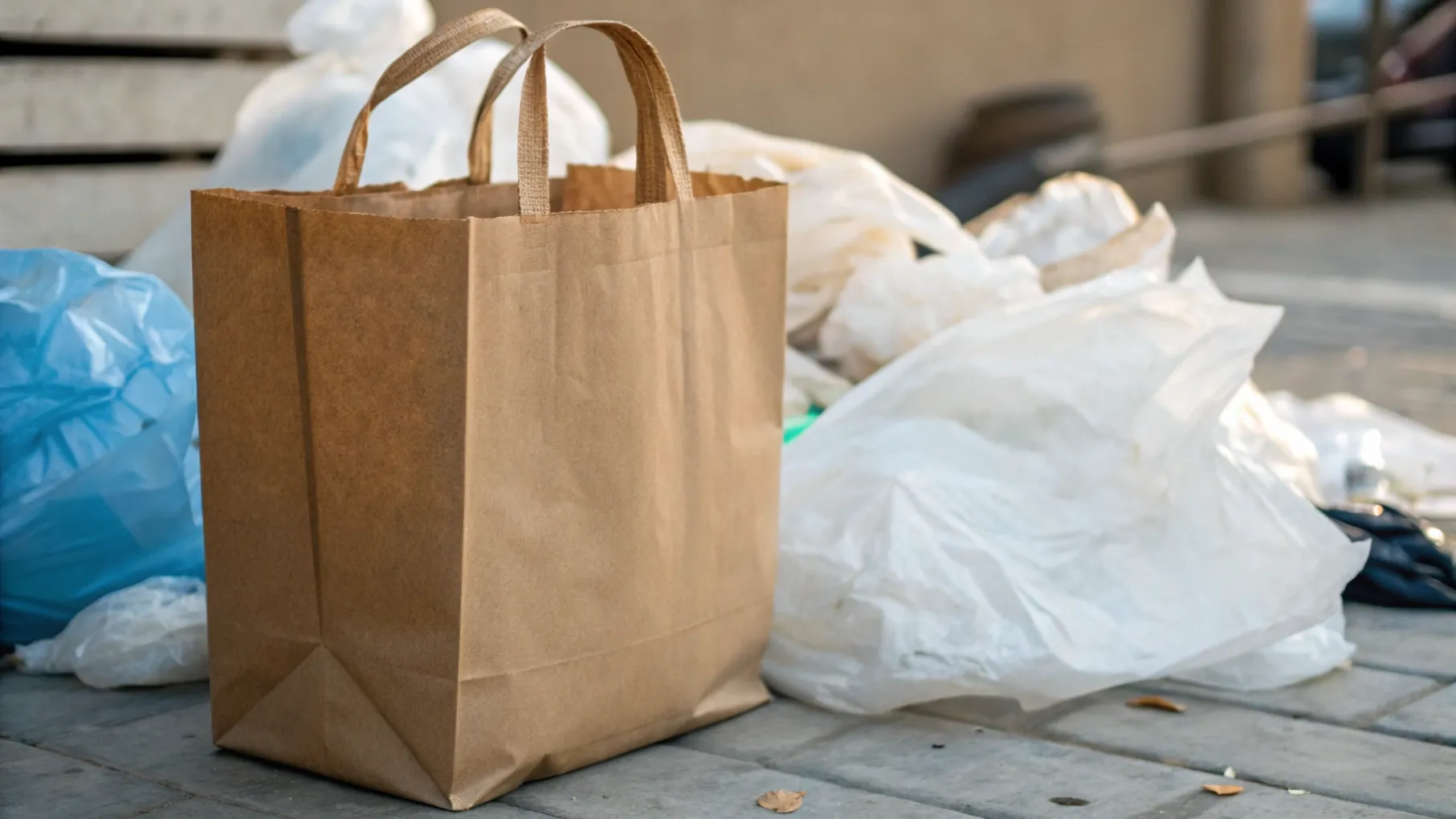
During my early printing factory days, I watched bags split because workers ignored basic structural pressure points. Brand managers like Jacky know that packaging is a mobile marketing asset. When you design a paper bag with proper reinforcement, customers willingly carry it again and again.
How Many Times Can Paper Bags Be Reused?
Using a flimsy paper bag for heavy items quickly leads to ripped bottoms. Consumers often wonder how many trips a paper carrier can realistically survive before giving out.
A standard retail paper bag lasts 3 to 5 trips under dry conditions, while heavy-duty reinforced kraft or luxury Euro totes can be reused 10 to 20 times for dry, lightweight goods.
Factors Dictating Paper Bag Lifespan
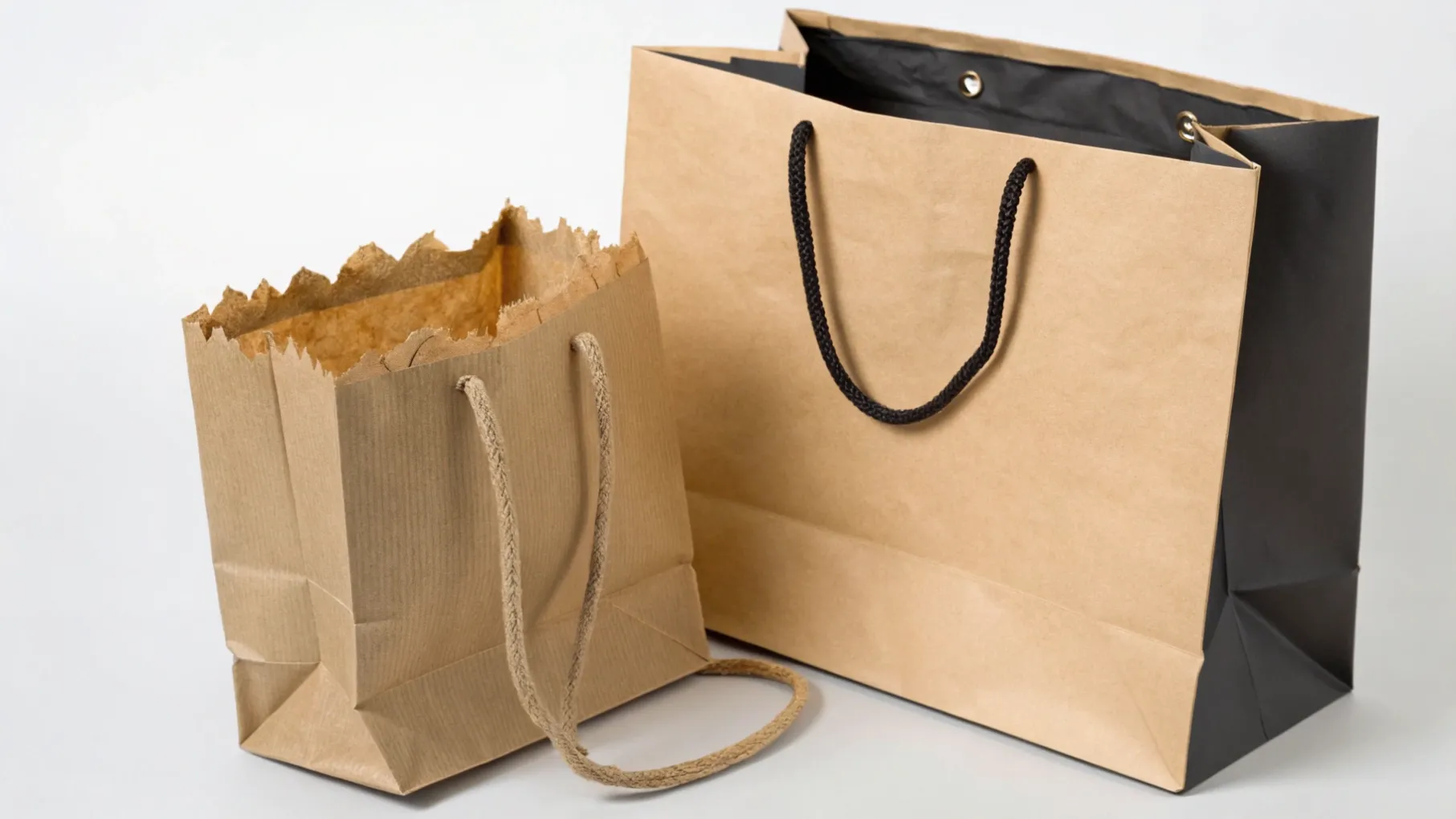
Paper reuse depends on structural engineering rather than luck. In our testing at Latitude, fiber length determines how well a bag handles mechanical fatigue. Virgin kraft paper made from long softwood fibers resists repeated folding, while cheap recycled paper cracks along side creases after two folds. Handle joint stress is the second failure point. A twisted paper handle glued behind an interior patch distributes downward tension across the upper rim.
Moisture remains the greatest threat to paper longevity. Carrying a damp water bottle softens cellulose bonds and cuts bottom tensile strength by half within minutes. Sharp box edges also create pinhole punctures that turn into long vertical tears during walking. When you pack dry, flat items like apparel, books, or office documents, a well-built bag easily survives dozens of daily commutes.
Paper Bag Specification | Typical Safe Trips | Maximum Weight Capacity | Primary Failure Risk Point |
|---|---|---|---|
Economy Flat-Handle Kraft (70–90 GSM) | 1 to 2 trips | Up to 3 kg | Handle seam glue separation |
Standard Twisted-Handle Kraft (100–120 GSM) | 3 to 6 trips | Up to 6 kg | Base corner abrasion and punctures |
Heavy-Duty Reinforced Kraft (130–160 GSM) | 7 to 12 trips | Up to 10 kg | Side gusset fold fatigue |
Laminated Luxury Euro Tote (180–250 GSM) | 10 to 20+ trips | Up to 12 kg | Cotton cord eyelet tearing |
What Are Paper Bags with Handles Called?
Searching through supplier catalogs without trade names causes endless ordering confusion. You might request a simple shopping sack and end up with flimsy, unhandled grocery bags.
Paper bags with handles are called kraft shopping bags, retail carrier bags, Euro totes, SOS handled bags, or boutique gift bags, depending on paper grade, rim folds, and handle materials.
Identifying Bag Names and Structural Styles
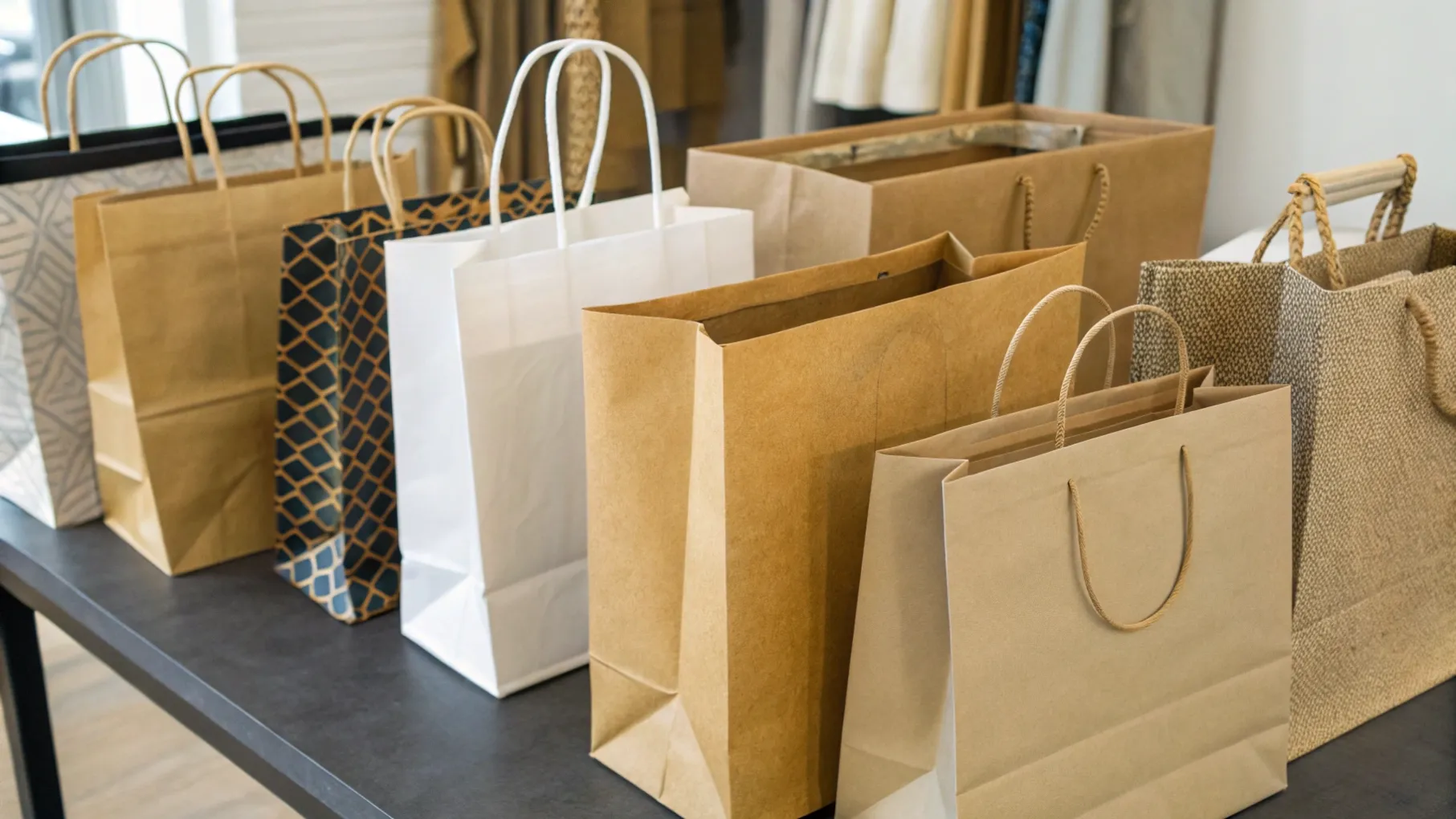
In my production career, I learned that naming mistakes cost businesses serious money. If Jacky orders a standard SOS bag when he needs a corporate gift carrier, the presentation fails. The Self-Opening Sack, or SOS bag, features an accordion gusset and block bottom. When fitted with twisted paper cord handles, it becomes the classic retail carrier bag used in apparel shops and bookstores.
For upscale retail, the industry uses the term Euro tote. Euro totes feature a turn-top rim reinforced with thick cardboard and fitted with soft cotton rope or satin ribbon. Quick-service bakeries use flat-tape handle bags. These bags feature flat folded kraft strips glued outside the rim, allowing fast flat packing for pastry boxes. Knowing these terms ensures you specify the exact structural build for your intended reuse goals.
Industry Trade Term | Handle Construction | Top Rim Style | Target Commercial Application |
|---|---|---|---|
Twisted Paper Carrier | Twisted kraft paper cords | Plain cut or serrated rim | Bookstores, retail apparel, gift shops |
Euro Tote | Cotton rope, ribbon, or die-cut | Cardboard-reinforced turn top | High-end fashion, jewelry, corporate events |
Flat Handle Takeaway | Folded flat kraft paper strips | Machine-cut serrated top | Bakeries, takeaway cafes, delis |
Die-Cut Handle Bag | Punched oval handle hole | Fold-over reinforced lip | Exhibition handouts, corporate brochures |
How Many Times Can Reusable Bags Be Used?
Switching between paper, plastic, and heavy fabric totes creates confusion about environmental payback. Many shoppers never use heavy fabric bags enough times to offset their high production footprints.
A standard non-woven polypropylene bag lasts 50 to 100 uses, a heavy organic cotton tote requires 100 to 150 uses to offset its footprint, while reusable paper bags deliver solid value within 3 to 10 uses.
The Break-Even Economics of Reusable Materials
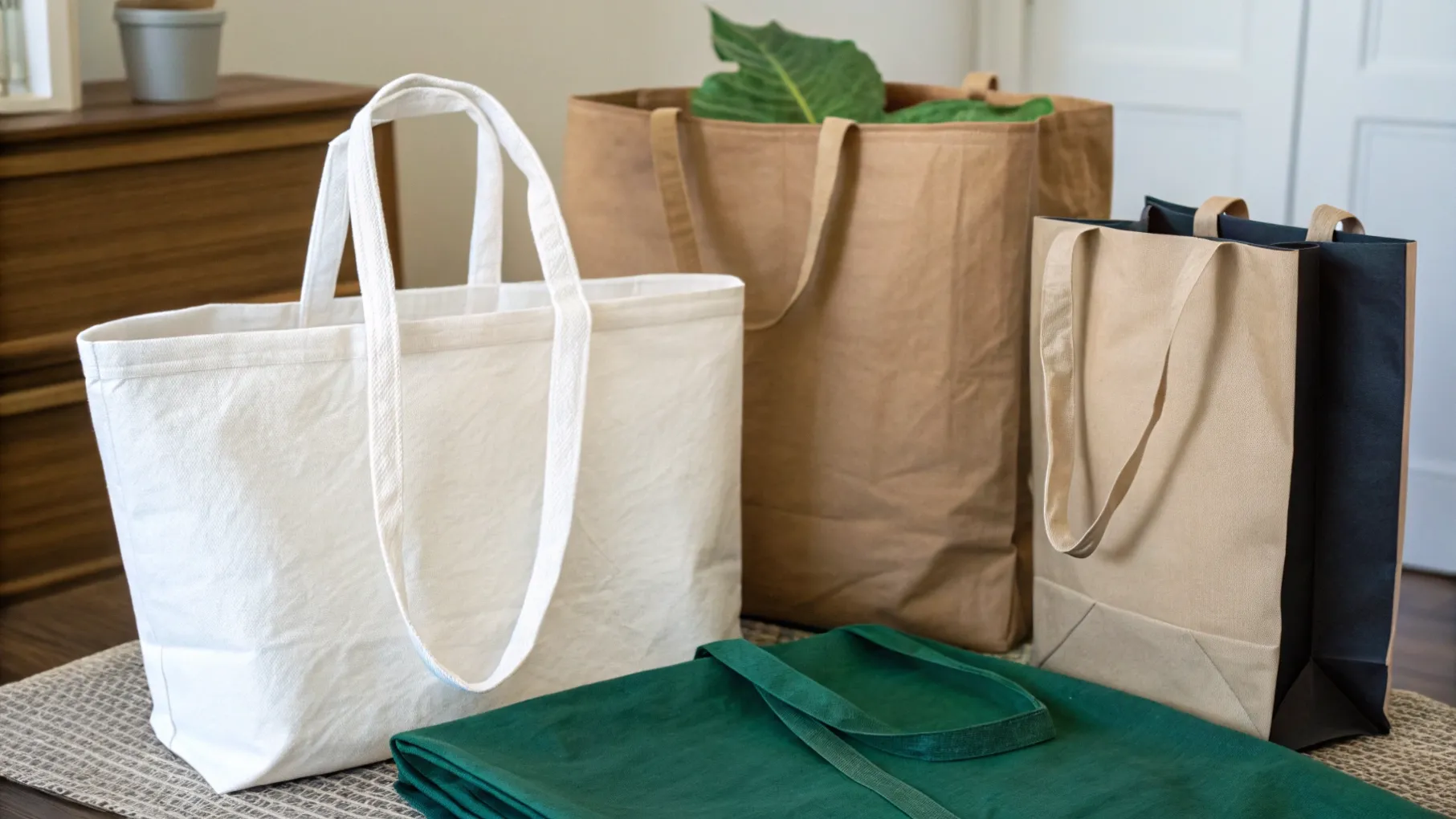
I always encourage marketing managers to calculate the total lifecycle of custom merchandise. Many companies print heavy cotton canvas totes because they assume cotton is automatically the most eco-friendly choice. However, growing cotton demands thousands of liters of fresh water and substantial agricultural land. A consumer must reuse that heavy cotton bag over one hundred times to match the environmental footprint of a simple paper bag.
Non-woven polypropylene bags offer good durability at a low unit price, but they shed microplastic fibers when washed or discarded. Kraft paper carriers occupy a balanced middle ground. They require far less energy to produce, break down naturally in home composts, and recycle easily through municipal paper bins. When you build a paper bag strong enough for five to ten trips, you give clients functional utility without creating permanent landfill waste.
Reusable Bag Material | Average Real-World Uses | Eco-Break-Even Target | End-of-Life Disposal Impact |
|---|---|---|---|
Handled Kraft Paper Bag | 3 to 8 uses | 3 to 4 uses | 100% Biodegradable and curbside recyclable |
Non-Woven Polypropylene (NWPP) | 30 to 60 uses | 10 to 20 uses | Non-biodegradable synthetic plastic waste |
Recycled PET Fabric (rPET) | 50 to 100 uses | 15 to 25 uses | Technical recycling stream required |
Organic Cotton Canvas Tote | 100 to 200+ uses | 100 to 150 uses | Biodegradable, but high agricultural impact |
Conclusion
Paper bags with handles can easily be reused multiple times when properly engineered with reinforced bases and quality kraft paper. Balance durability, design, and practical function to maximize your packaging investment.