Oct 23, 2026News & Insights
How to Choose the Most Suitable Marketing Gift for a Company?
Choose effective marketing gifts by prioritizing recipient needs, practical utility, durable quality, subtle branding, careful sampling, and cost control to strengthen brand recognition.
How to Choose the Most Suitable Marketing Gift for a Company?
Most promotional merchandise gets thrown away within hours of receiving it. Companies waste substantial marketing budgets on generic giveaways that fail to generate real business leads. You can easily fix this costly problem.
The most suitable marketing gift connects a clear business goal with the recipient’s daily practical needs. It builds steady brand recall through long-term utility, high manufacturing quality, and understated logo placement rather than aggressive advertising.
I spent many years on factory floors printing corporate orders before starting Latitude Experience. I watched countless businesses print bright logos on cheap items that broke after single use. That experience taught me that good marketing gifts require true production knowledge. Marketing managers like Jacky in Singapore have tight deadlines and demanding company targets. They cannot afford to waste budgets on products that embarrass their brand. You need gifts that support your business goals while solving everyday problems for your clients.
What Is the Complete Guide to Planning Corporate Gifts in 2026?
Modern corporate clients reject cheap plastic giveaways that create clutter. Poor gift planning leads to delayed event shipments, blown budgets, and negative brand impressions. You can streamline your entire strategy today.
Planning corporate gifts in 2026 requires defining clear campaign milestones, choosing certified sustainable materials, planning for split-location deliveries, and calculating full fulfillment costs including sampling, packaging, and local freight.

Corporate procurement has changed dramatically over the last few years. Companies today support hybrid workforces and care deeply about genuine environmental standards. When Jacky organizes a major corporate conference, he cannot simply order standard trade show items. He must plan delivery schedules months ahead to avoid supply chain disruptions. You must account for customs checks, warehouse assembly, and individual doorstep deliveries across regional offices. If you only look at the base product price, hidden fees for packing and transport will quickly break your marketing budget. Careful planning aligns your gifting timeline with your broader sales campaigns. This makes your brand look reliable and organized.
Core Stages for Corporate Gift Campaign Planning
Planning Phase | Critical Management Task | Key Risk to Avoid | Strategic Value Delivered |
|---|---|---|---|
Phase 1: Objective Setting | Link gifts to measurable goals like lead generation or client retention | Ordering random catalogue items without strategic intent | Maximizes campaign return on marketing investment |
Phase 2: Material & Sample Review | Test physical materials, seam strength, and closure durability | Bulk defects discovered right before event launch | Guarantees premium tactile brand impression |
Phase 3: Logistics & Customization | Choose correct print techniques and arrange split-shipment routes | Late venue arrivals and damaged gift packaging | Ensures zero-defect distribution across multiple offices |
I always advise clients to build clear lead-time buffers into their production schedules. You should never leave gift approvals to the final two weeks before an event. Quality finishing and ink curing require dedicated time on factory lines.
How to Choose Useful Branded Gifts That People Actually Keep?
Most recipients throw away branded items if they offer no practical value. Your logo disappears into desk drawers when products fail to fit regular work routines. You can ensure constant visibility by picking useful items.
You choose useful branded gifts by asking if recipients would keep the item without a logo, picking durable materials that withstand daily office handling, and keeping brand artwork subtle and tasteful.
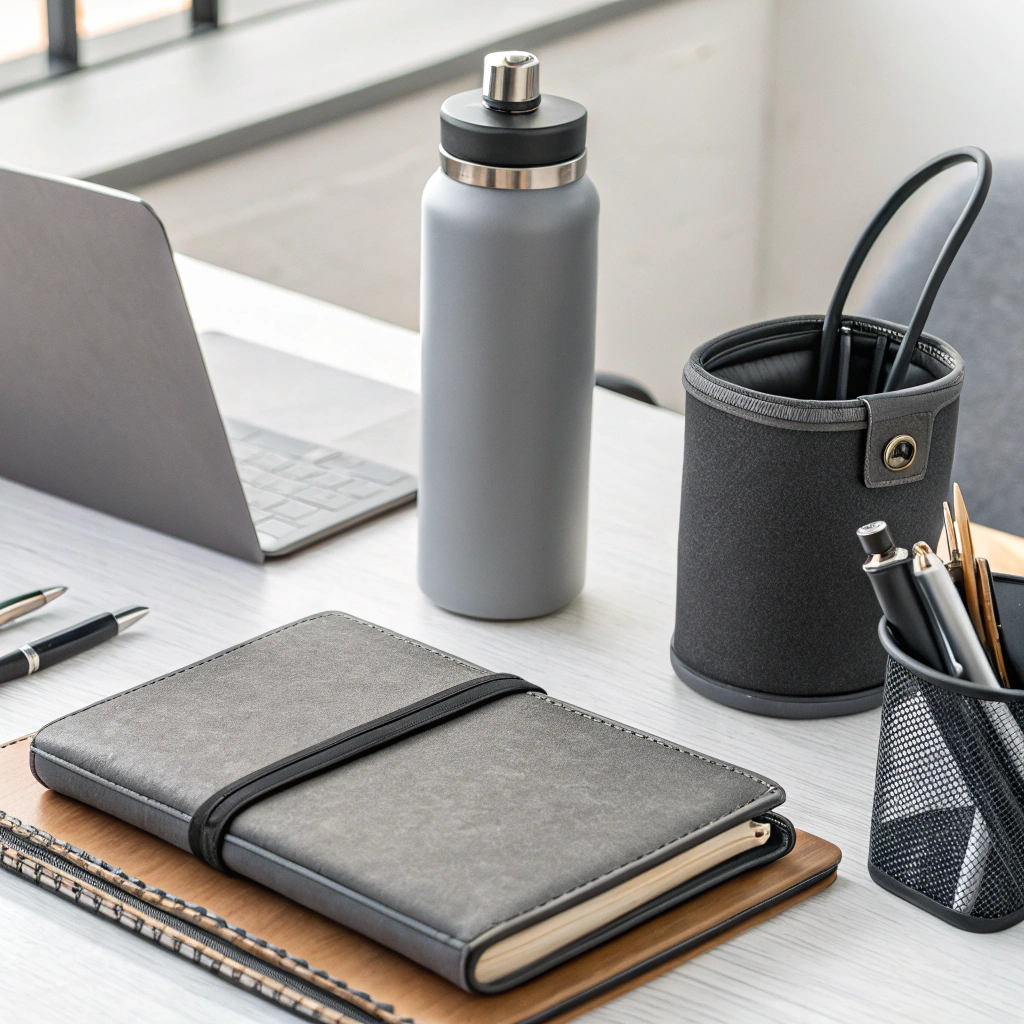
My time on printing presses taught me a vital lesson about user behavior. People keep gifts that make their workday easier. They discard flashy items that only serve as company advertisements. When you select an insulated travel tumbler, test the lid seal and ensure it fits standard car cup holders. When you produce a canvas tote bag, inspect the handle stitching and base weight. If a notebook paper bleeds ink when written on, a busy executive will throw it away immediately. Restraint in logo placement also matters. A discreet debossed logo or small laser-engraved mark makes an item feel premium and personal. Big, loud graphics turn your gift into a walking billboard that professionals feel awkward carrying.
Comparing Common Branded Gifts by Practical Value
Product Category | Typical Utility Level | Primary Failure Point | Recommended Premium Upgrade |
|---|---|---|---|
Drinkware | High daily desk exposure | Leaking lids and peeling painted coatings | Double-wall vacuum stainless steel with laser engraving |
Office Stationery | Moderate to high meeting use | Rough paper texture and weak glued bindings | Thread-sewn vegan leather journals with debossed logos |
Tech Accessories | High functional usage | Slow charging speeds and fragile cables | Certified wireless charging pads with over-heat protection |
You build brand trust every time a recipient uses your gift without issue. A dependable item transfers that positive feeling directly to your company’s core services. High utility guarantees that your investment keeps working for months.
How to Select the Ideal Corporate Gift in 7 Easy Steps?
Selecting merchandise without a systematic process creates confusion and costly ordering mistakes. Marketing teams frequently discover production defects only after final delivery boxes arrive. You can eliminate risk using a structured selection framework.
Select the ideal corporate gift through seven sequential steps: establish campaign goals, profile recipient routines, choose functional items, inspect physical proofs, confirm decoration methods, calculate total landing costs, and track post-campaign recipient feedback.

I established Latitude Experience around clear quality-control systems because production mistakes ruin marketing efforts. Many managers skip physical sample evaluations due to tight schedules, relying entirely on digital mockups. That shortcut creates major risks. Digital artwork files do not show how ink adheres to textured surfaces or how fabric handles weight. By following a step-by-step workflow, you catch manufacturing and design issues early. You also gain full clarity on your true expenses, including packaging and freight. This disciplined approach protects your marketing budget and ensures your brand presents a professional, consistent image at every client touchpoint.
The 7-Step Corporate Gift Selection Framework
Step Number | Action Step | Operational Focus | Output Requirement |
|---|---|---|---|
Step 1 | Establish Goals | Target audience profile and campaign purpose | Documented marketing objective |
Step 2 | Profile Recipient | Daily workplace environment and habits | Selected product category |
Step 3 | Select Product | Daily utility over temporary novelty | Shortlist of functional items |
Step 4 | Approve Physical Sample | Material weight, finish, and structural strength | Signed pre-production sample |
Step 5 | Confirm Branding Method | Match logo complexity to print surface | Verified vector artwork proof |
Step 6 | Review Full Landed Cost | Include setup, assembly, packing, and freight | Final approved budget sheet |
Step 7 | Track Campaign Impact | Measure client feedback and meeting conversions | Documented performance data |
I review these exact steps on every client project before we start mass manufacturing. A disciplined process removes uncertainty from promotional procurement. You can deliver gifts that your clients appreciate and keep on their desks.
Conclusion
Choosing the right marketing gift requires matching clear business goals with daily usefulness, inspecting physical production samples, and managing full landed costs to protect brand reputation.