Sep 11, 2026News & Insights
Is a Bullet Journal Useful in Daily Life and Work?
Bullet journaling offers a simple, flexible way to organize tasks, improve focus and memory, reduce mental clutter, and boost daily productivity.

Is a Bullet Journal Useful in Daily Life and Work?
Do you look at elaborate bullet journal spreads on social media and feel exhausted before you even write your first task? Treating bullet journaling as an art contest turns an effective organizational method into another stressful chore.
A bullet journal is extremely useful when used as an analog thinking and rapid-logging system that consolidates tasks, appointments, and mental notes into one flexible notebook to clear mental clutter and expose real priorities.
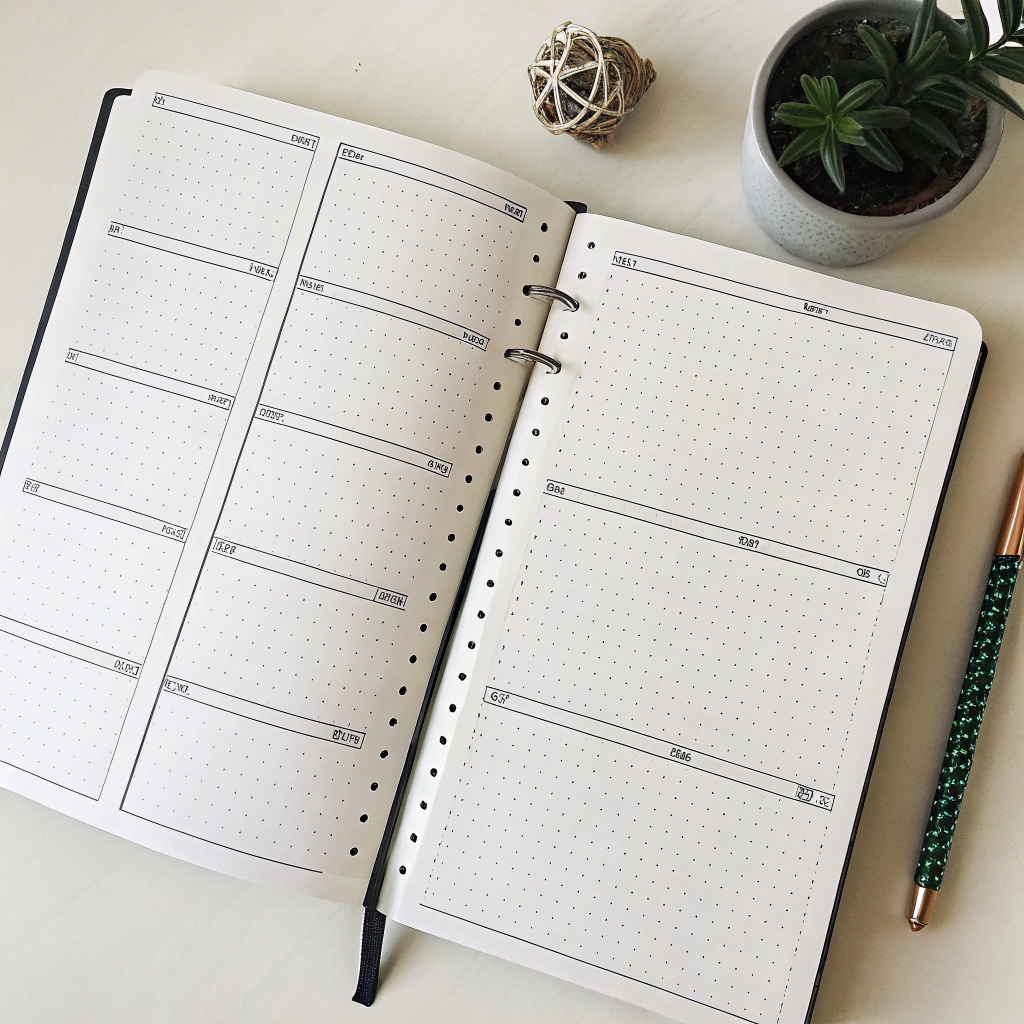
When I started my career working in a printing factory years ago, I watched thousands of complex daily planners run through binding machines, only to realize that the most productive people often relied on a simple grid notebook and a single pen. The bullet journal method (BuJo) succeeds because it adapts to your changing routine rather than forcing your life into rigid, pre-printed boxes. Let us examine whether bullet journaling is worth the time investment, evaluate its effectiveness against digital apps, and explore why it provides unique cognitive support for neurodivergent minds.
Is Bullet Journaling Worth It?
Are you hesitating to start a paper journal because you worry drawing layouts will waste hours of your busy week? Over-complicating page setups leads to quick burnout and abandoned notebooks.
Bullet journaling is well worth it if you follow the minimalist rapid-logging method, spending just five to ten minutes a day capturing thoughts and migrating tasks rather than designing elaborate decorative spreads.

Minimalist Rapid-Logging Versus Artistic Perfectionism
The value of bullet journaling depends on whether you treat the practice as a productivity framework or a decorative hobby. The original methodology developed by Ryder Carroll requires no artistic talent. It relies on a straightforward syntax: a dot for a task, an open circle for an event, and a dash for a note. Spending forty minutes drawing calendar rulers and watercolored banners gives the illusion of productivity while delaying actual work.
For busy brand managers like Jacky juggling multiple promotional campaigns, an analog rapid-log acts as a cognitive release valve. Writing by hand forces you to slow down just enough to filter out low-value distractions. If copying an unfinished task from yesterday to today feels tedious, that friction is intentional: it forces you to ask whether the task is truly necessary, needs to be broken down, or should be crossed out entirely.
Approach Type | Daily Setup Time | Core Tools Required | Primary Motivation | Risk of Abandonment |
|---|---|---|---|---|
Minimalist Functional BuJo | 5 to 10 Minutes | One dot-grid notebook & one black pen | Mental clarity, task execution, reflection | Very Low (Flexible and forgiving) |
Artistic Decorative BuJo | 30 to 60 Minutes | Washi tape, brush pens, rulers, stickers | Creative expression and visual journaling | High (Fails during hectic work periods) |
Rigid Pre-Printed Planner | 2 to 5 Minutes | Any standard pen | Following fixed hourly time-slots | Moderate (Wasted pages when days are skipped) |
Pure Digital Task App | Variable | Smartphone or tablet | Instant syncing and automated alarms | High (Prone to notification overwhelm) |
Is Bullet Journaling Effective?
Do you find yourself bouncing between digital to-do apps, desktop calendars, and sticky notes without ever feeling organized? Digital fragmentation scatters attention and lets critical follow-ups slip through the cracks.
Bullet journaling is highly effective because handwriting triggers active neurosensory encoding, while the analog migration process forces ruthless daily prioritization and eliminates out-of-sight task accumulation.

Cognitive Offloading, Task Migration, and Information Centralization
Cognitive science consistently demonstrates that the tactile friction of handwriting enhances memory retention and concept comprehension compared to typing on a glass screen. Digital to-do lists make adding tasks frictionless, which often leads to overwhelming lists of dozens of low-priority items that users end up ignoring. Paper demands physical space and deliberate effort, encouraging intentional decision-making.
A bullet journal centralizes everything in one physical bound volume: meeting logs, project timelines, personal goals, and sudden phone notes. Using an index and page numbers eliminates scattered sticky notes. When corporate buyers choose custom journals for their teams, specifying 100 to 120 GSM bleed-resistant dot-grid paper and dual ribbon bookmarks provides the structural foundation employees need to stay organized across quarters.
Effectiveness Driver | Traditional Digital Apps | Bullet Journal Analog Method | Real-World Workplace Impact |
|---|---|---|---|
Focus & Distraction | High; notifications interrupt workflow | Zero; offline paper provides calm focus | Deep, uninterrupted project execution |
Memory Encoding | Low; typing is passive mechanical tapping | High; writing shapes letters by hand | Far higher retention of meeting action points |
Task Accumulation | Unchecked growth of forgotten digital lists | Intentional daily rewriting (Migration) | Tasks are either completed or discarded |
Layout Adaptability | Locked to software UI and rigid templates | Blank dot-grid adapts to any project shape | Freedom to design meeting tables or freeform notes |
Is Bullet Journal Good for ADHD?
Do you struggle with adult ADHD or executive dysfunction, where standard daily planners feel like suffocating cages and digital apps become endless distraction traps? Traditional time-management systems often fail neurodivergent brains by penalizing inconsistency.
Yes, bullet journaling is exceptionally good for ADHD because it acts as an external working-memory buffer, accommodates erratic schedules without guilt over blank pages, and provides immediate dopamine hits through tactile check-offs.

Overcoming “Out of Sight, Out of Mind” and Planner Guilt
Individuals with Attention Deficit Hyperactivity Disorder (ADHD) often struggle with working memory deficits, object permanence (“out of sight, out of mind”), and time blindness. Digital task managers frequently fail because closed phone apps hide tasks behind screens full of distracting social feeds and email banners. A physical notebook lying open on an office desk keeps active priorities in plain sight.
Equally important is the lack of pre-printed calendar dates. In a standard dated planner, missing two weeks of entries leaves behind demoralizing blank pages that induce shame and cause many to abandon the planner completely. A bullet journal eliminates planner guilt: if you skip three weeks during a chaotic period, you simply turn to the next fresh page, write today’s date, and pick up right where you left off without penalty.
ADHD Executive Challenge | Why Standard Tools Fail | How Minimalist BuJo Helps | Daily Practical Outcome |
|---|---|---|---|
Poor Working Memory | Brain dumps get lost across phone apps | Single-notebook capture (“The Brain Dump”) | Reduces anxiety from trying to remember tasks |
Time Blindness | Digital calendars hide task scale | Physical spatial mapping across one page | Visualizes the true size of the day’s commitments |
Task Paralysis | Massive digital lists trigger shutdown | Selecting just 3 to 5 priority bullets daily | Lowers overwhelm to initiate focused action |
Perfectionist Burnout | Empty printed dates cause guilt | Undated pages eliminate “ruined” planner feelings | Sustains a lifelong, self-forgiving habit |
Conclusion
A bullet journal is a powerful tool when you prioritize function over decoration, transforming an ordinary paper notebook into an external thinking system that sharpens focus, reduces mental fatigue, and keeps daily priorities clear.