Jul 14, 2026News & Insights
Is Using a Glass Water Bottle Good for Your Health?
Glass water bottles provide pure, chemical-free hydration, preserve natural taste, resist odors, and offer a healthier, eco-friendly alternative with modern durable designs.
Is Using a Glass Water Bottle Good for Your Health?
Are you worried about chemical tastes or invisible toxins in your daily drinking water? Using cheap plastic bottles might expose you to harmful chemicals while ruining the fresh flavor of your water. You deserve a clean, safe way to stay hydrated.
Yes, using a glass water bottle is excellent for your health. High-quality glass is non-porous and chemical-free, which means it never leaks harmful toxins into your water or traps bacteria, ensuring pure hydration every single day.
I started my career in a busy print and production factory, where I handled thousands of plastic promotional items. I saw firsthand how heat and wear can degrade plastic over time. That experience made me realize the incredible value of natural, stable materials like glass when it comes to what we put inside our bodies.
What Happens if We Drink Water in a Glass Bottle Daily?
Your daily energy levels drop when you do not drink enough water because of an unpleasant plastic taste. Neglecting your hydration can lead to constant fatigue, headaches, and poor focus. You need an easy way to enjoy drinking water.
Drinking from a glass bottle daily keeps your water tasting crisp and fresh, which naturally encourages you to drink more. It also completely eliminates your daily exposure to microplastics and harmful chemical residues found in other containers.
I always tell my clients that the best bottle is the one you actually want to use. A close friend of mine, Jacky, used to carry a metal sports bottle that made his water taste like copper by lunchtime. He barely drank half of it. I gave him a thick, borosilicate glass bottle, and he told me his daily water intake doubled in a week simply because the water finally tasted clean and refreshing.
To understand how daily use impacts your body, we can look at the physical changes that occur when you swap out low-quality containers for glass.
Daily Benefits of Choosing Glass
Feature | Low-Quality Plastic / Metal | Premium Glass Bottle |
|---|---|---|
Taste Preservation | Retains old flavors and odors | Leaves water completely neutral |
Bacterial Growth | Rough surfaces trap residue | Smooth surface is easy to sanitize |
Chemical Leaching | Releases BPA or microplastics | Zero chemical release, even in hot weather |
By making glass a part of your daily routine, you protect your body from unwanted chemical exposure. Your water stays as pure as the source, helping you maintain consistent energy and focus throughout your busy workday.
Are Glass Water Bottles Healthier?
You want to make healthy choices, but confusing claims about food-grade plastics leave you feeling unsure. Buying the wrong bottle can expose your family to hidden toxins. This uncertainty makes choosing safe drinkware stressful.
Yes, glass bottles are significantly healthier because they require no chemical linings or plasticizers to remain stable. Glass is a natural material that does not react with acidic drinks, hot liquids, or sunlight, making it the safest choice for pure beverages.
In the gifting and printing industry, I learned that many metal bottles require epoxy linings to prevent corrosion, and even BPA-free plastics can release other chemical compounds. Glass does not need any of these treatments. It is naturally food-safe.
Health and Safety Comparison of Bottle Materials
Bottle Material | Internal Lining Required? | Chemical Leaching Risk | Easy to Visual Inspect for Dirt? |
|---|---|---|---|
Standard Plastic | No | High (especially when heated) | No |
Lined Aluminum | Yes (epoxy resins) | Medium (if lining scratches) | No |
Borosilicate Glass | No | None | Yes (completely transparent) |
This transparency is a major health benefit. You can easily see inside a glass bottle to check for mold or residue around the seal. It gives you absolute confidence that the container you are drinking from is completely clean.
Why Don’t We Use Glass Bottles Anymore?
You love the idea of using glass, but you worry about dropping it on a hard concrete floor. Carrying a heavy bottle in your bag feels inconvenient during a long commute. These practical concerns keep you from making the switch.
We stopped using glass bottles because plastic is lighter, cheaper to manufacture, and does not break when dropped. However, modern borosilicate glass and protective silicone sleeves have solved these durability issues, making glass practical again.
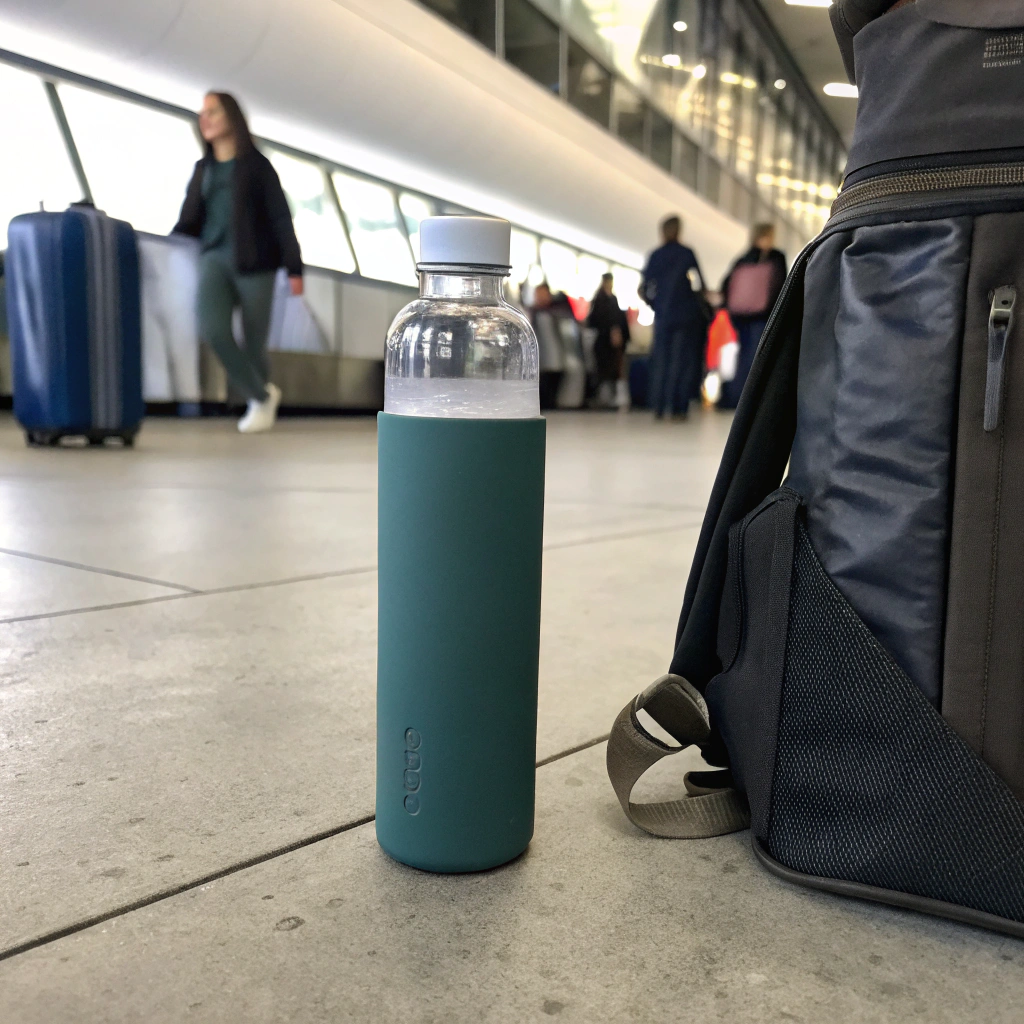
When I source corporate gifts, project managers often worry about fragility. They ask me if glass is too risky for active events. It is true that traditional glass breaks easily, but modern borosilicate glass is engineered to resist thermal shock and impacts. Adding a simple silicone sleeve makes the bottle highly drop-resistant and comfortable to hold.
Overcoming the Practical Challenges of Glass
- Weight: Modern glass bottles use thin, high-strength walls to reduce overall weight in your daily bag.
- Fragility: Protective food-grade silicone sleeves cushion impacts and prevent cracks during accidental drops.
- Portability: Built-in carry loops on the lids make it easy to hold your bottle while walking or commuting.
While plastic became the cheap standard for convenience, it came at a high cost to our health and the environment. Choosing a protected glass bottle gives you the best of both worlds: the safety of natural glass and the durability of modern design.
Conclusion
Glass water bottles are the healthiest choice because they keep your water pure, taste-free, and chemical-free. Modern protective designs make glass a safe, durable, and practical habit for your daily life.