Jul 14, 2026Success Stories
Kraft Paper Shopping Bags: Why Does Simple Packaging Become a Premium Branding Tool?
Kraft paper shopping bags turn simple packaging into a premium branding tool by combining sustainability, durability, and customizable designs that enhance customer experience and brand recognition.
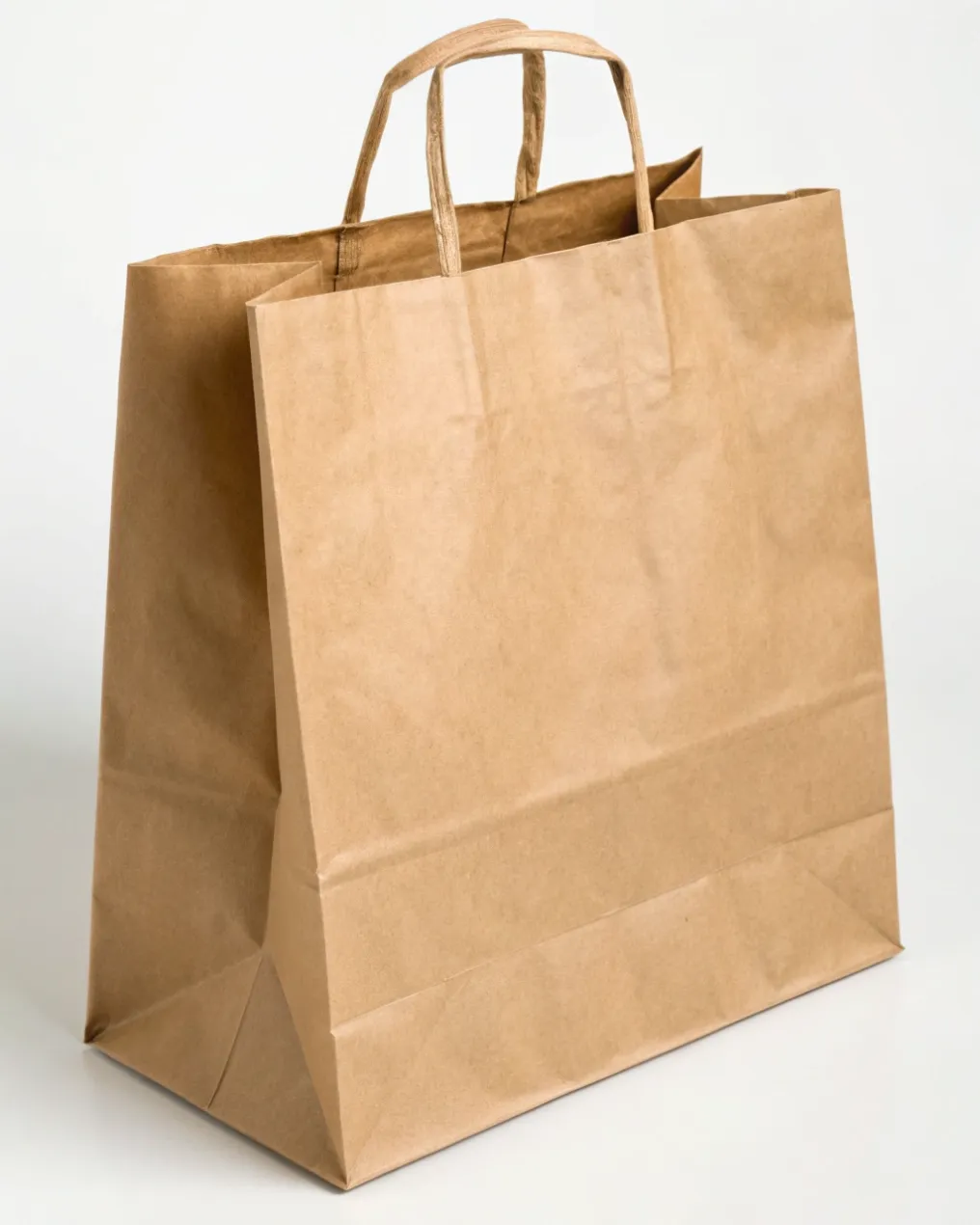
Kraft Paper Shopping Bags: Why Does Simple Packaging Become a Premium Branding Tool?
Are you tired of plain packaging bags that rip apart before your customers even reach their cars? Viewing your store carriers as a basic operational expense rather than a customer experience asset is a major missed retail opportunity.
Kraft paper shopping bags are heavy-duty retail carriers made from durable, unbleached wood pulp using the traditional kraft chemical process. They dominate modern packaging because they combine natural tear resistance, thick paper weights, and an eco-friendly texture that elevates your brand image instantly.
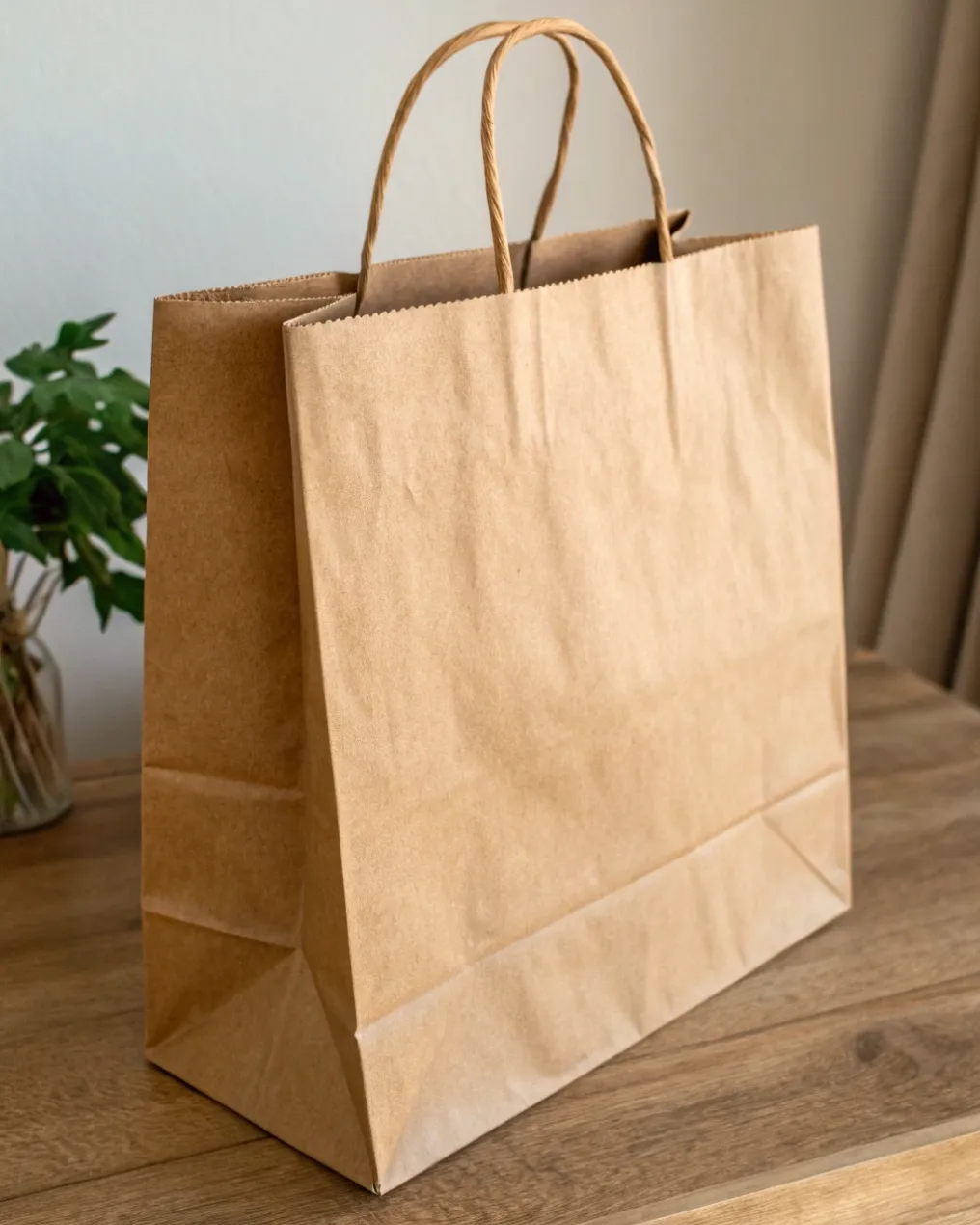
I spent my early career inside a humble printing and packaging factory, managing paper rollers and adjusting ink settings. I learned firsthand that high-quality packaging should never feel like a throwaway wrapper. It should act as an extension of the product itself. True retail success happens when a bag behaves so reliably that customers keep it, fold it up, and reuse it for weeks. Let us explore how the honest texture of kraft paper can quietly transform your checkout counter into a long-term marketing strategy.
What Is a Kraft Paper Bag and How Is It Made Tough?
Do you get confused when suppliers ask you to choose between standard bleached paper, recycled fibers, and virgin wood pulps? Selecting a weak paper structure can cause your custom gift bags to tear at the seams when carrying heavy box corners.
A kraft paper bag is an organic packaging product manufactured by chemically treating wood chips with an alkaline blend to dissolve lignin holding the fibers together. This specific factory method leaves behind strong, long-chain wood cellulose, creating a highly durable paper sheet that naturally resists punctures.
When boutique store managers consult me at Latitude Experience, they often ask for a simple brown carrier without understanding what makes it strong. In our production world, the word "kraft" actually means strength in German. Unlike traditional white printing paper that goes through harsh bleaching processes that weaken the organic fibers, unbleached kraft paper retains its raw, long-fiber structure. This natural composition gives the paper its signature woody tint, rugged touch, and high tensile strength.
Critical thinking shows that understanding paper weight prevents expensive structural failures. Let us analyze the primary kraft paper styles used in modern retail manufacturing.
Paper Weight (GSM) | Handle Construction Type | Tactile Material Vibe | Best Practical Retail Use |
|---|---|---|---|
70 GSM to 90 GSM | Die-cut flat handle | Thin, highly flexible, lightweight | Small pharmacies, bakeries, takeaway cafes |
100 GSM to 120 GSM | Twisted paper cord | Sturdy, traditional, ribbed texture | Supermarket grocery checkouts, clothing boutiques |
130 GSM to 150 GSM | Knotted cotton ribbon | Stiff, rigid, premium cardboard feel | Luxury cosmetics, corporate gifts, jewelry retail |
If your provider uses thin, low-grade paper for a heavy gift pack, the bottom will drop out under a load. Matching the sheet density to your product weight is essential for ensuring a professional customer experience.
Is Kraft Paper Good for Packaging Retail Products Safely?
Do you worry that switching away from synthetic plastic films will make your product shipments vulnerable to damp weather or friction damage? Many brands assume that eco-friendly packaging means sacrificing real security.
Kraft paper is exceptionally good for packaging because it offers high bursting strength, excellent moisture absorption, and flexible cushioning qualities. Its porous structure permits air to escape during packing, allowing sheets to wrap tightly around irregular product shapes without slipping or tearing.
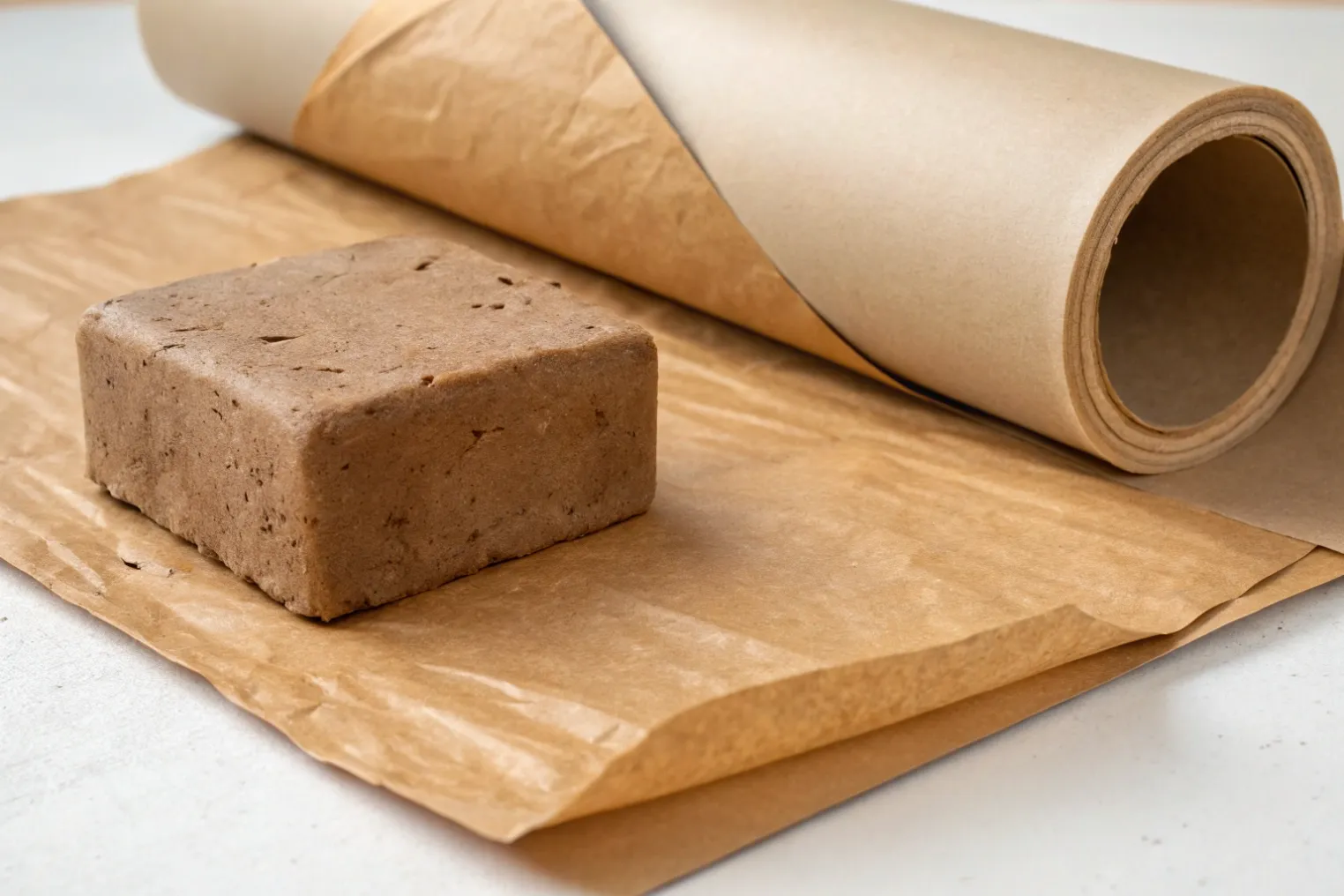
I always remind marketing managers that modern consumers judge your company culture by the way you wrap your goods. Plastic bubbles and glossy plastic lamination look cheap and communicate a throwaway mindset. Kraft paper delivers a sense of quality through absolute simplicity and honesty. It does not require artificial chemical glazes to signal luxury. A clean, matte brown surface combined with a crisp, minimal logo print creates an instant impression of craftsmanship and transparency before the customer even opens the package.
Let us look closely at the engineering markers that separate premium reusable kraft bags from single-use alternatives. Reliability is what drives repeated customer circulation.
Construction Zone | Low-Cost Single-Use Paper Bag | Premium Reusable Kraft Shopping Bag | Real-World Brand Protection |
|---|---|---|---|
Base Support | Single fold with basic glue line | Double-layer reinforced cardboard base insert | Prevents heavy glass bottles from ripping the bottom |
Top Rim Finish | Raw cut top edge | Folded inward turn-top collar reinforcement | Stops the handles from tearing out under sudden jerks |
Side Seams | Simple overlapping seam | Gusseted side expansion panels | Expands smoothly to hold wide shoeboxes flat |
Logo Print | Oversized, glossy ink | Understated matte ink or blind debossing | Looks like an elegant lifestyle accessory |
True sustainability is achieved when an item remains useful over multiple weeks. When you provide a retail carrier that holds its shape through multiple trips, your brand gains authentic visibility across city streets and office spaces.
Is Kraft Paper Commonly Used for Grocery Checkout Bags Worldwide?
Are you trying to figure out if paper packaging can handle the fast-paced volume and heavy weight requirements of a busy supermarket line? Tracking historical retail shifts shows why this natural wood material has taken over global checkouts.
Kraft paper is the primary global standard for grocery checkout bags because it stands upright independently, packs efficiently, and carries heavy loads without stretching out. Supermarkets rely on its rigid structure to speed up packing lines while meeting local strict bans on single-use plastics.
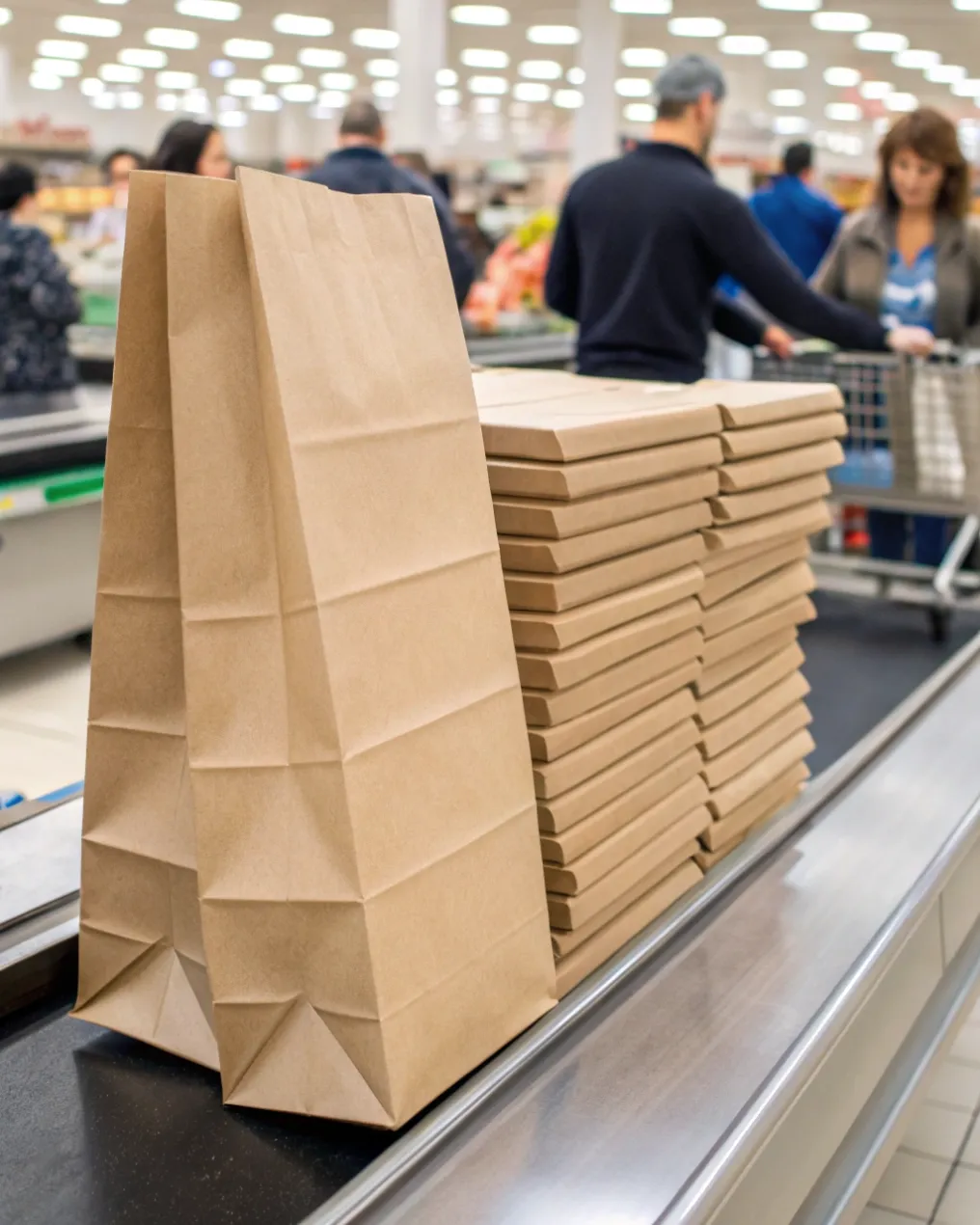
During my factory days, I watched the retail industry transition rapidly away from thin plastic bags. The big challenge for supermarkets was finding an alternative that did not slow down the cashiers. Plastic sacks are floppy and require specialized metal racks to hold them open during scanning. A gusseted kraft paper bag solves this operational bottleneck instantly. It pops open with a single snap and stands completely stable on the counter, allowing workers to pack items using both hands.
Critical thinking helps us see that operational efficiency drives mass adoption. Let us trace how the simple kraft grocery sack became an essential tool for organic marketing exposure.
When you invest in high-utility packaging, you are not throwing money away on garbage liners. You are buying an active billboard that customers willingly carry long after the initial sale is complete.
Conclusion
Kraft paper shopping bags succeed because their long-fiber wood strength, rigid open structures, and natural textures convert standard checkout packaging into a reusable, premium asset that reinforces corporate trust.