Sep 10, 2026News & Insights
What Are the Key Factors to Consider When Buying Tote Bags?
Choose tote bags based on durability, fabric weight, handle reinforcement, gusset design, and daily needs to ensure lasting functionality, comfort, and better long-term value.
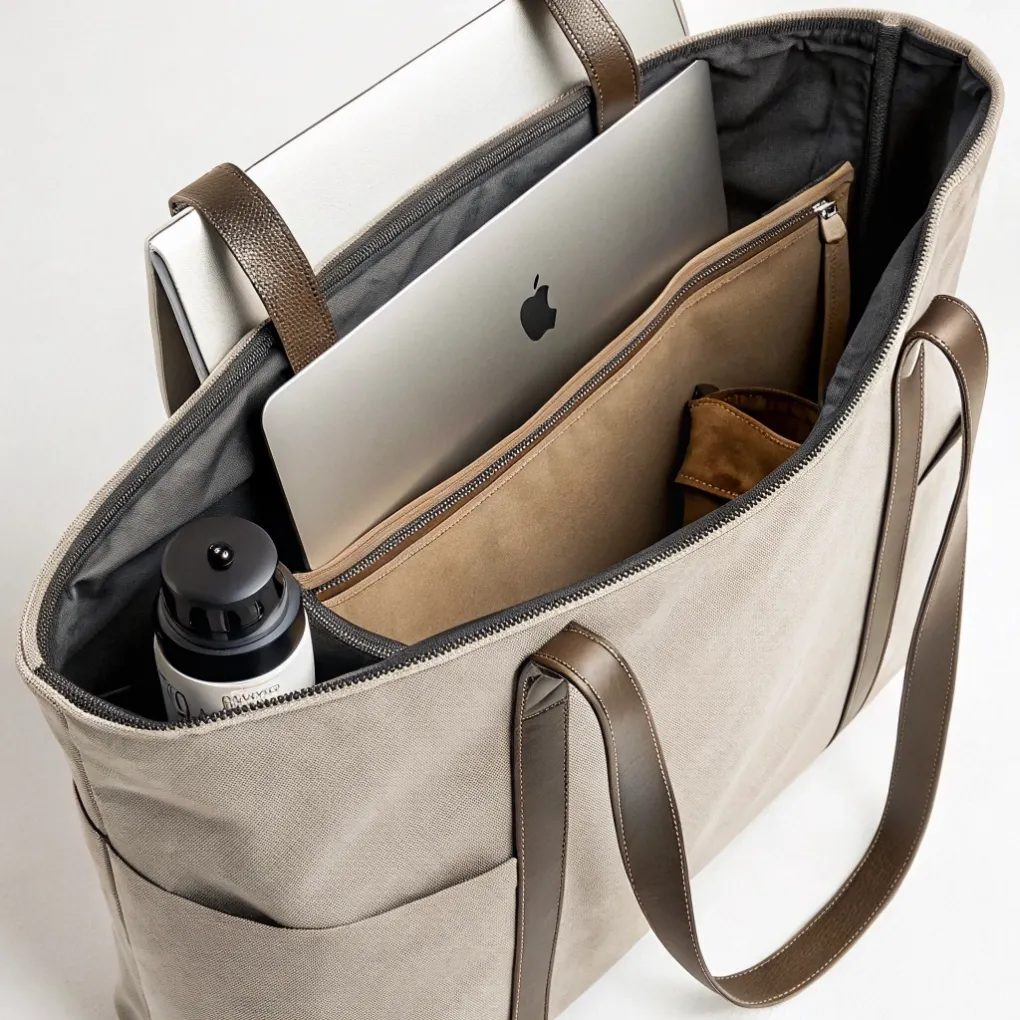
What Are the Key Factors to Consider When Buying Tote Bags?
Do you pick tote bags based only on an attractive catalog photo, only to discover thin fabric that sags and handles that tear under real weight? Choosing a tote on appearance alone leads to uncomfortable carrying, broken seams, and discarded merchandise.
The essential factors to consider when buying a tote bag are intended daily use, textile density (fabric weight), handle drop and reinforcement stitching, base gusset architecture, secure closure types, and overall cost-per-use value.
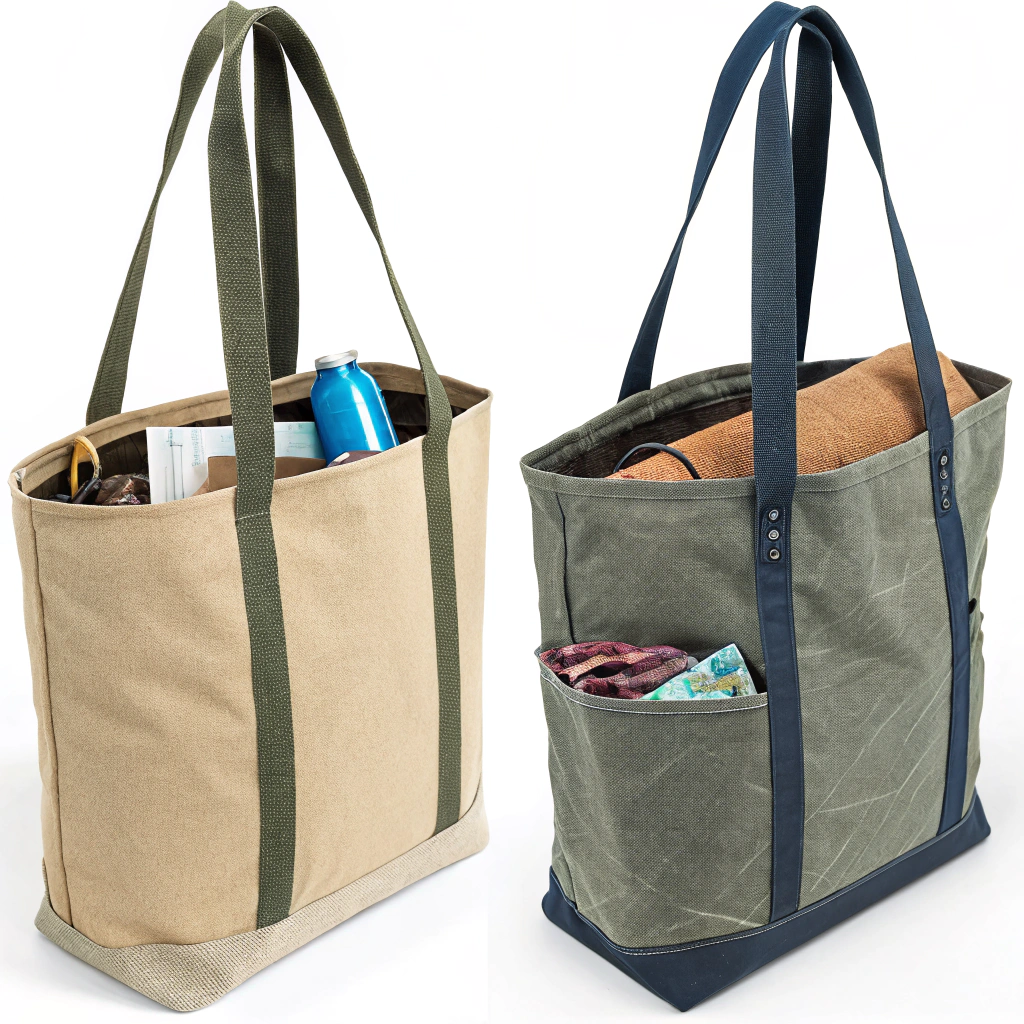
When I started my career working in a printing factory years ago, I saw thousands of totes produced with weak single-needle stitching that failed on the first grocery run. A tote bag is not just a promotional billboard; it is a load-bearing tool. Whether carrying a laptop to the office or groceries home from the market, the construction must match real-world physical demands. Let us break down the defining characteristics, explore what makes totes highly desirable, and walk through how to select the right build.
What Are the Characteristics of a Tote Bag?
Are you confused about what technically separates a true functional tote bag from a flat promotional pouch or a standard shoulder bag? Misunderstanding structural anatomy leads to buying bags that lack the volume and strength you actually need.
The defining characteristics of a tote bag are an open-access main compartment, parallel carrying handles anchored to the side panels, durable woven fabric, and a rectangular profile designed for fast top-loading.
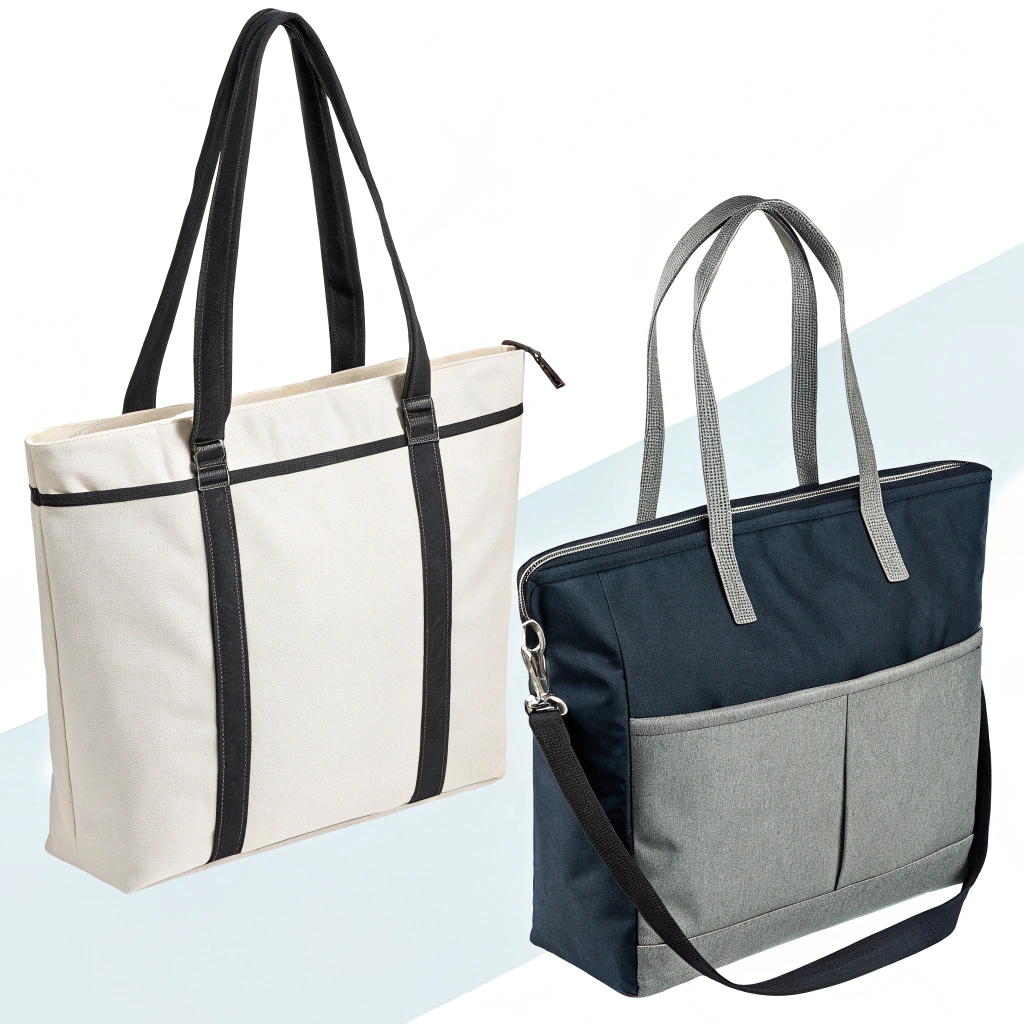
Structural Architecture, Handle Ergonomics, and Gusset Geometry
The fundamental anatomy of a tote bag centers on unhindered access and structural balance. Unlike messenger bags with complex flaps or backpacks with dual harness systems, a tote relies on a wide upper opening that lets users drop items inside quickly. The parallel handles must feature an ergonomic width—ideally 3 to 3.8 cm—to distribute downward pressure evenly across the shoulder or palm without curling into a painful cord.
Another critical physical characteristic is base construction. A flat two-panel envelope tote provides zero depth, meaning a single book or food container pushes the seams outward awkwardly. In contrast, a tote featuring a square T-gusset or full continuous side-and-bottom box gusset provides genuine three-dimensional volume, allowing the bag to stand upright on flat surfaces for effortless loading.
Anatomical Component | Low-End Promotional Spec | Engineered Utility Standard | Functional Practical Benefit |
|---|---|---|---|
Fabric Specification | 4 to 6 oz (135–170 GSM) Sheeting | 10 to 14 oz (300–400 GSM) Duck Canvas | Stands upright; resists abrasive tears |
Base Architecture | Flat 2-panel stitched envelope | 10 to 15 cm Full Box Gusset | Accommodates boxed items, laptops, and shoes |
Handle Attachment | Single horizontal lockstitch | Industrial Box-and-Cross (X-Box) Bar-tack | Supports 10 to 15 kg loads without ripping |
Strap Drop Dimension | 15 to 18 cm (Hand-carry only) | 25 to 28 cm (Shoulder clearance) | Loops comfortably over thick winter coats |
What Makes a Tote Bag Highly Sought After?
Have you ever wondered why certain tote bags become viral, cult-favorite accessories while hundreds of free promotional bags end up buried in closets? Desirability is driven by subtle lifestyle alignment rather than loud corporate advertising.
A tote bag is highly sought after when it blends quiet-luxury minimalism, heavy tactile fabric weight, functional internal organization (like laptop sleeves and bottle holders), and subtle, understated branding.
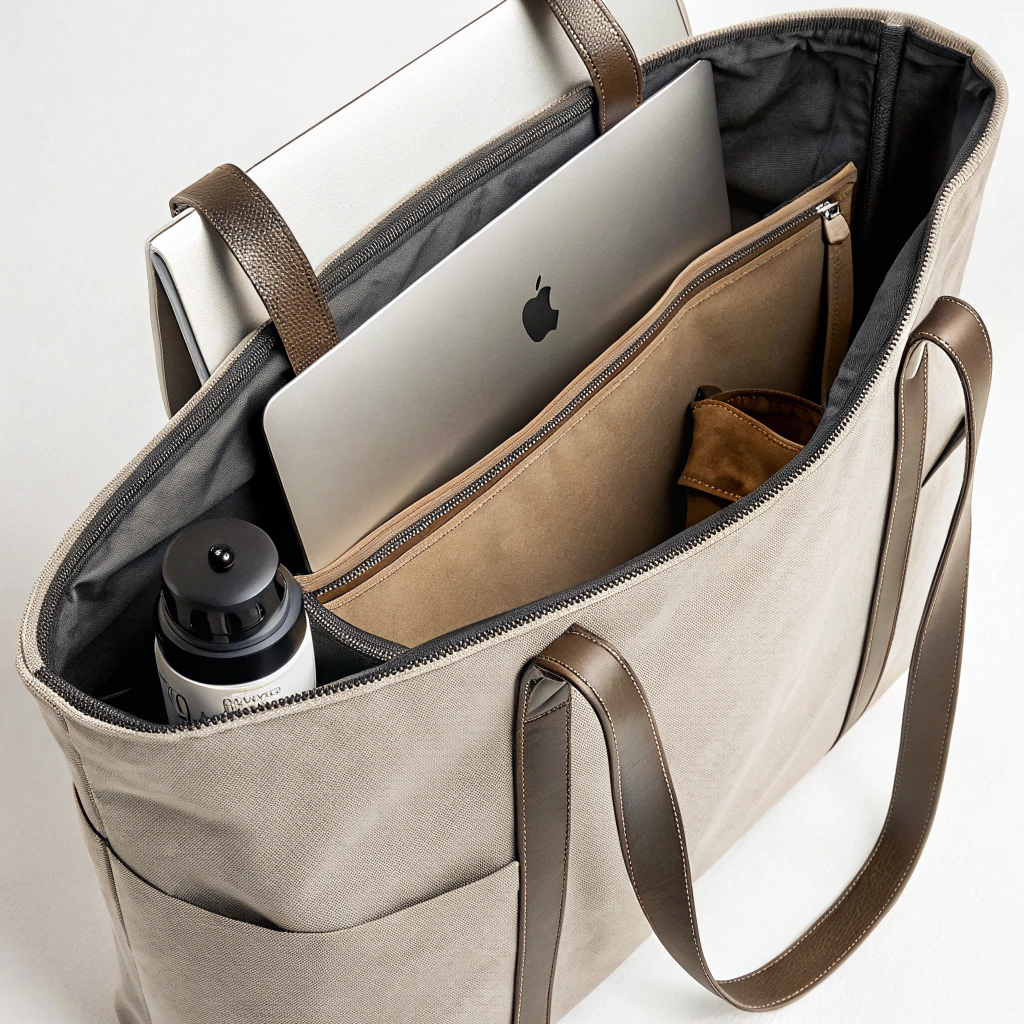
Lifestyle Utility, Tactile Quality, and Branding Restraint
Modern consumers gravitate toward totes that feel like authentic lifestyle pieces rather than commercial advertisements. When a bag is manufactured using heavy, natural unbleached cotton twill, brushed bull denim, or structured water-resistant waxed canvas, it carries physical weight and tactile richness. People inherently equate fabric thickness and dense weave structures with craftsmanship and reliability.
For marketing managers like Jacky designing corporate merchandise, desirability requires branding restraint. Oversized, colorful corporate logos scream promotional swag, causing recipients to relegate the bag to household chores. Conversely, an understated tonal embroidery mark, a blind-debossed leather patch, or a discreet woven label on the side seam elevates the tote into everyday streetwear that recipients proudly carry to client meetings, cafes, and weekend flights.
Desirability Factor | Common Discarded Swag Approach | Desirable Retail-Grade Execution | Result on Brand Equity |
|---|---|---|---|
Branding Placement | Giant corporate URL and phone numbers | Discreet 4 cm chest embroidery or hem tag | Worn regularly as personal fashion |
Internal Organization | Cavernous empty void (Keys get lost) | Dedicated slip pocket + brass key leash | High daily reliance and utility |
Fabric Texture | Stiff, paper-thin synthetic polyester | Heavyweight sanforized cotton duck | Communicates durability and premium care |
Closure Hardware | Open raw top edge | Recessed YKK zipper or magnetic snap | Protects valuables from transit theft |
How Do I Choose the Right Tote Bag?
Do you struggle to determine which tote specifications match your specific daily routine or corporate event goals without overspending? Choosing without a clear framework leads to purchasing under-engineered bags that fail prematurely.
To choose the right tote bag, define your primary carry payload, select the corresponding fabric weight and base gusset style, verify reinforced X-box handle stitching, and evaluate long-term cost-per-use over initial unit price.
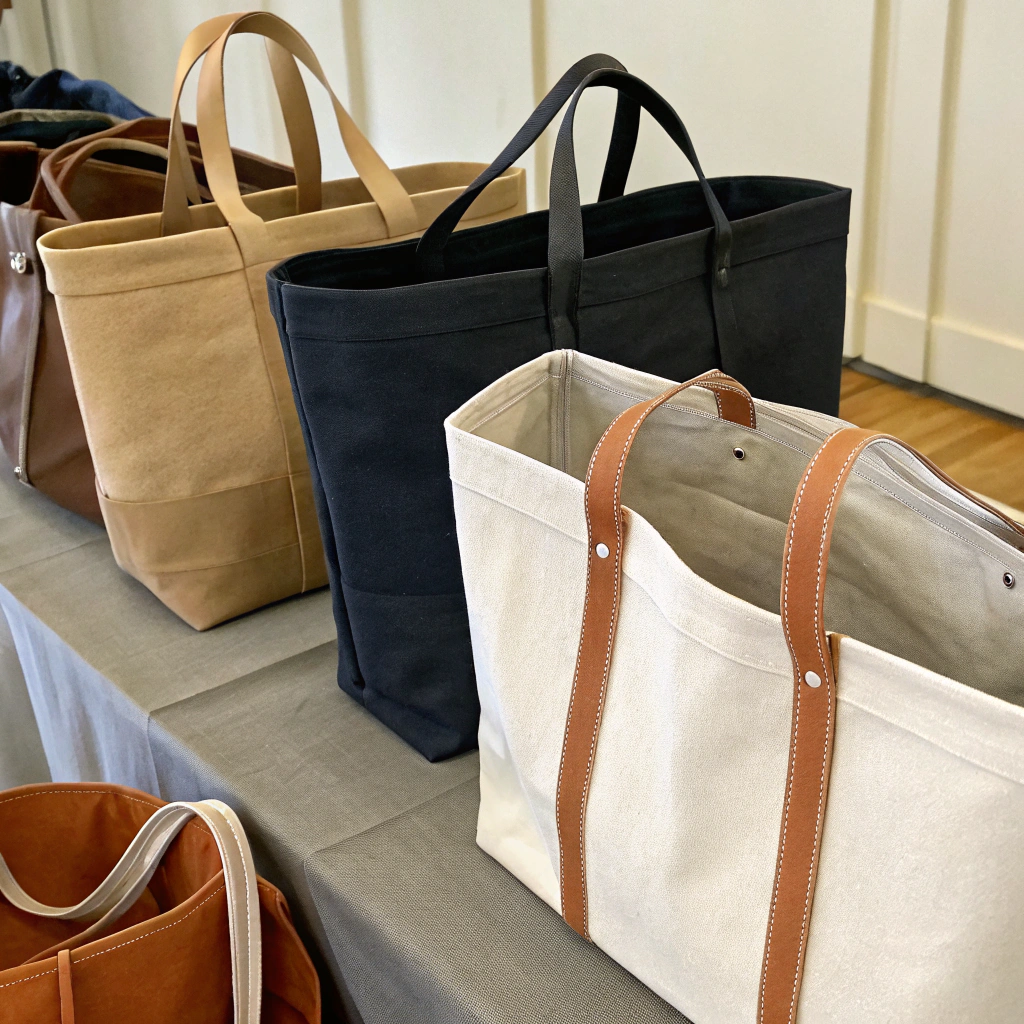
Five-Step Selection Framework for Work, Errands, and Gifting
Selecting the perfect tote requires aligning the physical build with the environment it will inhabit. If the bag is meant for professional commuting, prioritize internal organization: look for padded laptop dividers, structured bottoms, and recessed zipper closures to protect electronics from rain. For farmers’ markets and grocery runs, prioritize washable, heavy-gauge cotton canvas with wide, unpadded webbing handles that can be easily tossed into a washing machine.
When procuring totes in bulk for corporate gifting programs, calculate the true cost-per-use rather than hunting for the cheapest unit price. A low-cost $1.50 tote that tears after three outings has a terrible return on marketing investment. A well-constructed $6.00 canvas bag with reinforced stress points that survives three years of weekly commutes delivers hundreds of brand impressions, making it the vastly more cost-effective asset.
Use Scenario | Recommended Fabric Density | Essential Construction Details | Primary Selection Objective |
|---|---|---|---|
Executive & Office Commute | 14 to 16 oz Duck Canvas / PU Trim | Padded 15” laptop pocket + top zip closure | Professional polish and hardware security |
Grocery & Market Shopping | 10 to 12 oz Unbleached Cotton | 12 cm square gusset + Box-X handle joins | Heavy payload capacity and machine washability |
Event Swag & Trade Shows | 6 to 8 oz Cotton Twill | Flat or light gusset + clean screen print | Lightweight portability and bulk cost control |
Travel & Weekend Carryall | 16 to 18 oz Waxed Canvas | Full base panel + dual slip pockets + key clip | Extreme abrasion and weather resistance |
Conclusion
Choose a tote bag by evaluating its long-term durability, handle reinforcement, and functional capacity, ensuring you invest in a practical, well-crafted companion that delivers lasting value across hundreds of real-world uses.