Sep 10, 2026Services Overview
What Is Custom T-Shirt and Garment Printing?
Learn what custom T-shirt and garment printing is, from choosing fabrics and designs to selecting the right printing method for creating durable, high-quality apparel that represents your brand.
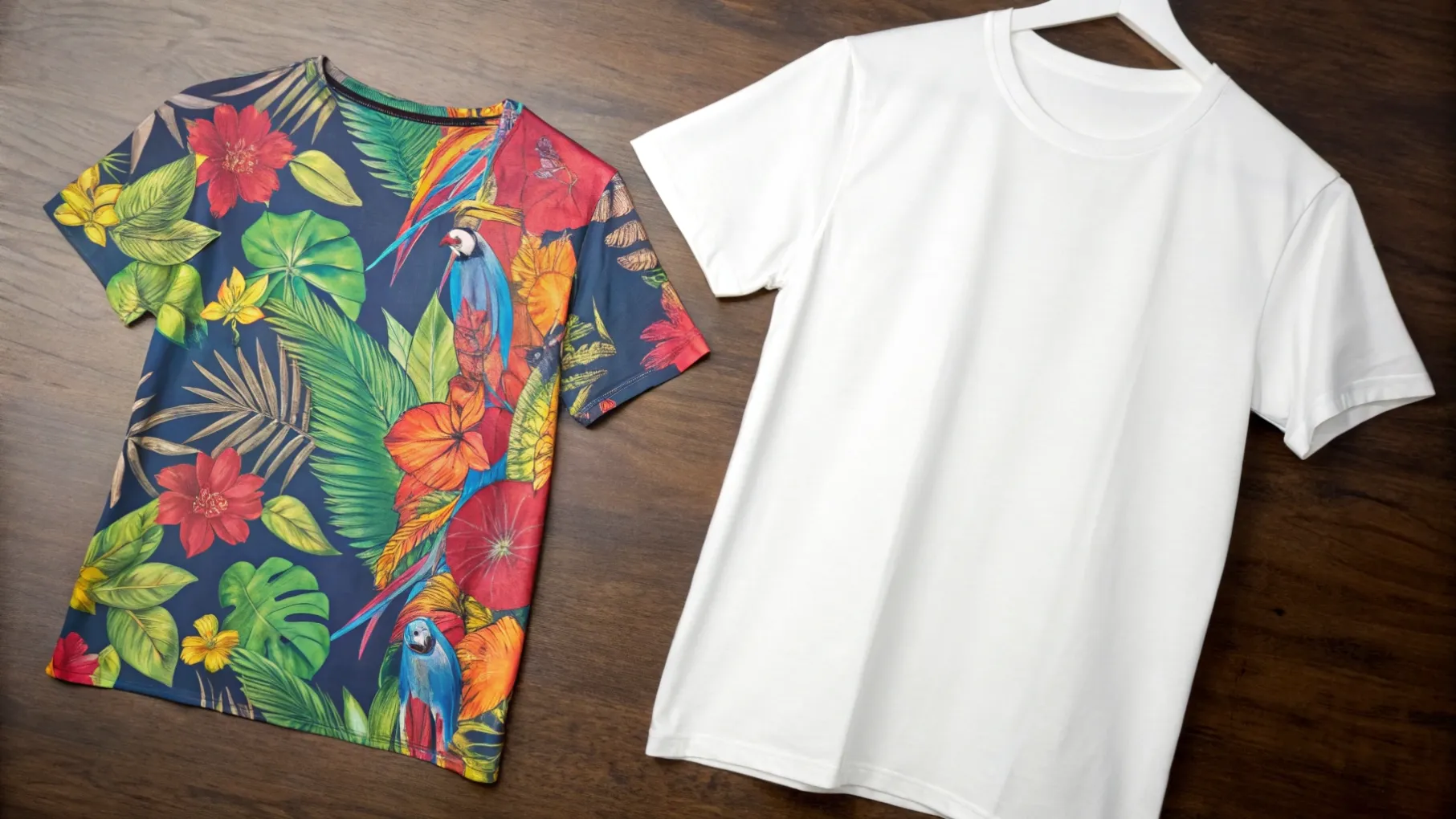
What Is Custom T-Shirt and Garment Printing?
Do you view custom apparel as simply slapping a logo onto a blank tee, only to end up with stiff graphics that peel after two washes? Treating garment printing as a generic commodity compromises comfort and damages your brand image.
Custom T-shirt and garment printing is the specialized manufacturing process of transferring original artwork, branding, or graphics onto apparel using techniques like screen printing, DTG, DTF, embroidery, or sublimation to create wearable communication assets.
When I started my career working in a printing factory years ago, I quickly realized that ink on fabric is never just decoration. A printed garment is mobile communication. Whether an employee wears it on a job site or an attendee carries it home from a conference, the shirt must balance visual clarity with daily comfort. Let us look at what custom shirts represent, break down the core printing technologies, and walk through how custom apparel moves from digital artwork to finished wearable goods.
What Does "Custom Shirt" Mean?
Are you confused about what truly separates a custom shirt from an off-the-rack retail garment? Understanding the distinction helps you determine the right level of customization for your organization's goals.
A "custom shirt" means an apparel piece tailored to specific brand requirements through unique graphic printing, embroidery, Pantone-matched fabric dyes, bespoke sizing cuts, or custom neck labels.
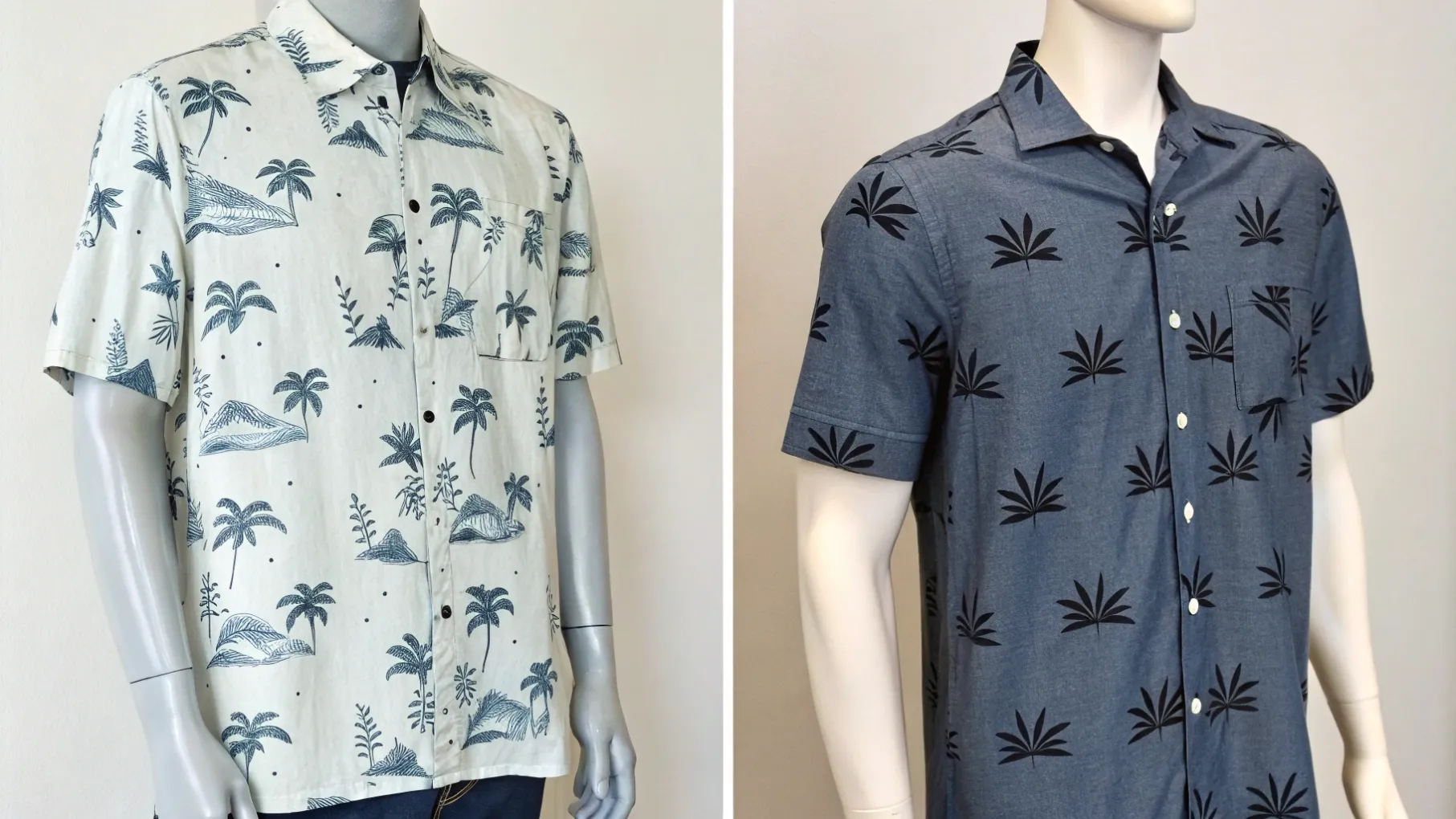
Decorative Embellishment Versus Full Bespoke Manufacturing
In modern apparel sourcing, "custom shirt" spans two primary operational tiers: surface customization and cut-and-sew manufacturing. The most common tier is surface decoration, where an established blank garment—such as a ring-spun cotton crewneck—is embellished with screen printing, digital ink, or embroidery. This method allows businesses to produce branded merchandise quickly with low minimum orders and predictable sizing.
The second tier is full custom cut-and-sew manufacturing. Here, fabric panels are knitted, dyed to exact corporate Pantone standards, printed across the flat fabric, and then stitched together with custom woven neck tags and hem labels. For brand managers like Jacky, recognizing this difference is critical for managing production schedules. Surface decoration takes days, while bespoke cut-and-sew lines require longer lead times to deliver retail-grade brand assets.
Customization Tier | Production Workflow | Minimum Order Quantity | Turnaround Time | Best Fit Scenario |
|---|---|---|---|---|
Surface Embellishment | Printing onto pre-made blank tees | 24 to 100 units | 5 to 10 business days | Corporate events, fast campaigns, team gear |
Custom Relabeling | Removing factory tags; adding screen-printed size tags | 100 to 300 units | 2 to 3 weeks | Boutique corporate apparel and client gifts |
Full Cut-and-Sew | Knitting, dyeing, all-over printing, and panel assembly | 500 to 2,000+ units | 6 to 10 weeks | High-end retail lines and bespoke uniform rollouts |
What Are the Different Types of T-Shirt Printing?
Do you feel overwhelmed by the technical jargon of garment decoration when reviewing supplier quotes? Choosing an incompatible printing method can lead to cracked inks, sweaty plastic panels, or faded colors.
The primary types of T-shirt printing are traditional screen printing, direct-to-garment (DTG), direct-to-film (DTF), dye sublimation, heat transfer vinyl (HTV), and computerized embroidery.
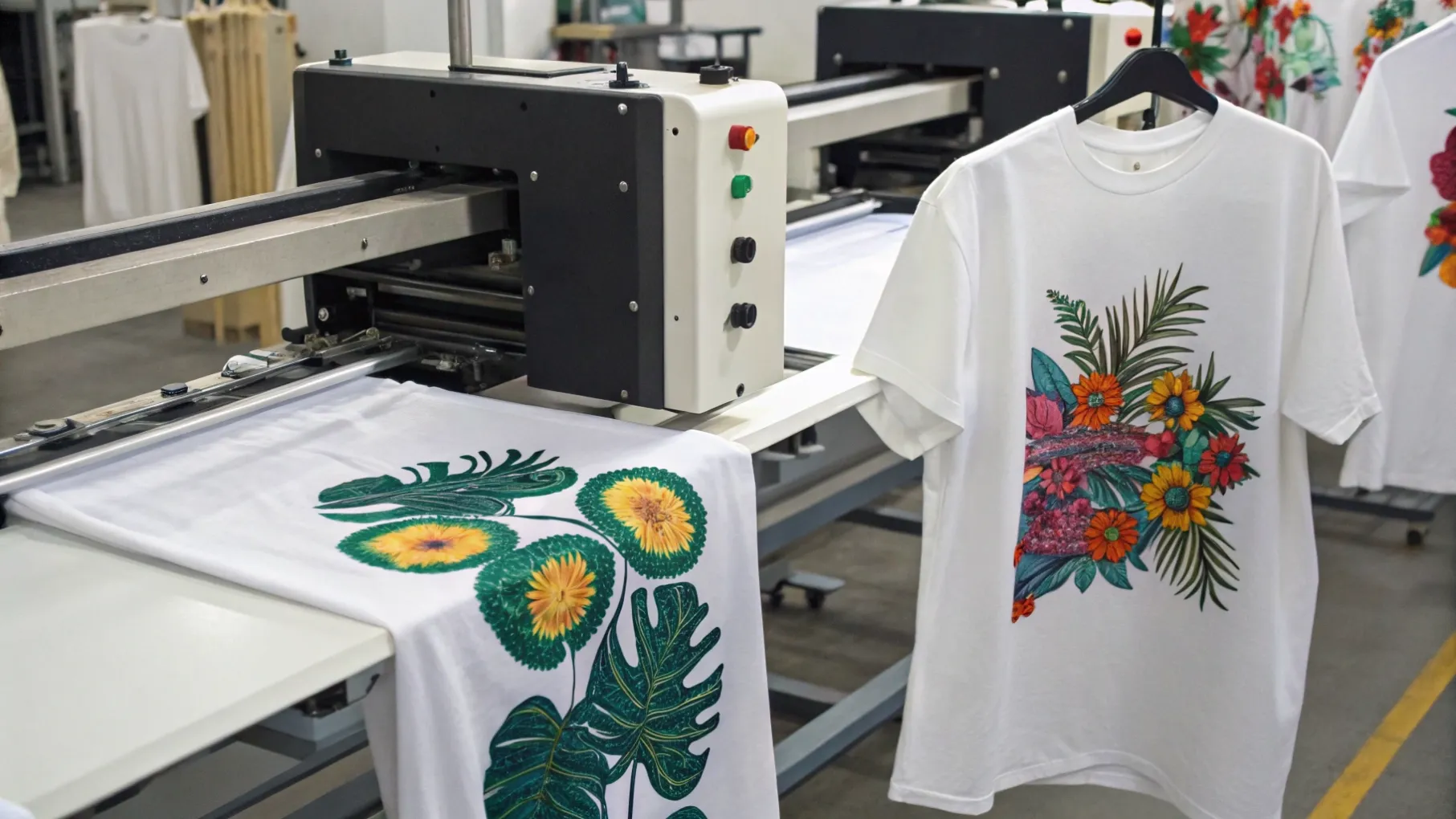
Technical Mechanisms, Substrates, and Performance Profiles
Every printing technique interacts with textiles differently based on chemistry, temperature, and mechanical bonding. Traditional screen printing pushes liquid plastisol or water-based inks through fine mesh stencils into fabric knits, yielding unbeatable longevity on volume orders. When artwork features photorealistic gradients or hundreds of colors, digital DTG acts like an office inkjet printer calibrated for pre-treated natural cotton fibers.
Direct-to-Film (DTF) has emerged as a powerhouse for multi-fabric versatility, printing water-based pigment onto PET film backed with hot-melt adhesive powder to bond cleanly to polyester, nylon, and heavy fleece. For athletic performance jerseys, dye sublimation uses heat to gasify disperse dyes directly into synthetic polyester fibers, creating permanent, breathable graphics with zero surface texture.
Printing Method | Best Textile Substrates | Optimal Volume Run | Graphic Capability | Hand-Feel / Breathability |
|---|---|---|---|---|
Screen Printing | 100% Cotton & Poly-Cotton | 50 to 10,000+ units | 1 to 6 spot solid colors | Soft (Water-base) to Firm (Plastisol) |
Direct-to-Garment (DTG) | 100% Ring-Spun Combed Cotton | 1 to 50 units | Complex photos & gradients | Ultra-soft, breathable hand-feel |
Direct-to-Film (DTF) | Cotton, Poly, Nylon, Canvas | 1 to 500 units | Full-color high-detail artwork | Smooth, flexible, slightly raised film |
Dye Sublimation | 100% White/Light Polyester | 25 to 1,000+ units | All-over full-color patterns | Zero hand-feel (Dye bonds into fiber) |
Heat Transfer Vinyl (HTV) | Cotton & Performance Spandex | 1 to 20 units | Basic text, numbers, simple icons | Noticeable rubberized solid patch |
How Are Custom T-Shirts Printed?
Have you ever wondered what steps occur between submitting an Illustrator file and opening a box of freshly cured custom shirts? Skipping quality gates along the production line leads to off-center prints and misaligned colors.
Custom T-shirts are printed through a five-stage industrial process: digital artwork preparation and color separation, screen or film imaging, garment alignment on printing platens, ink transfer application, and high-temperature oven curing.
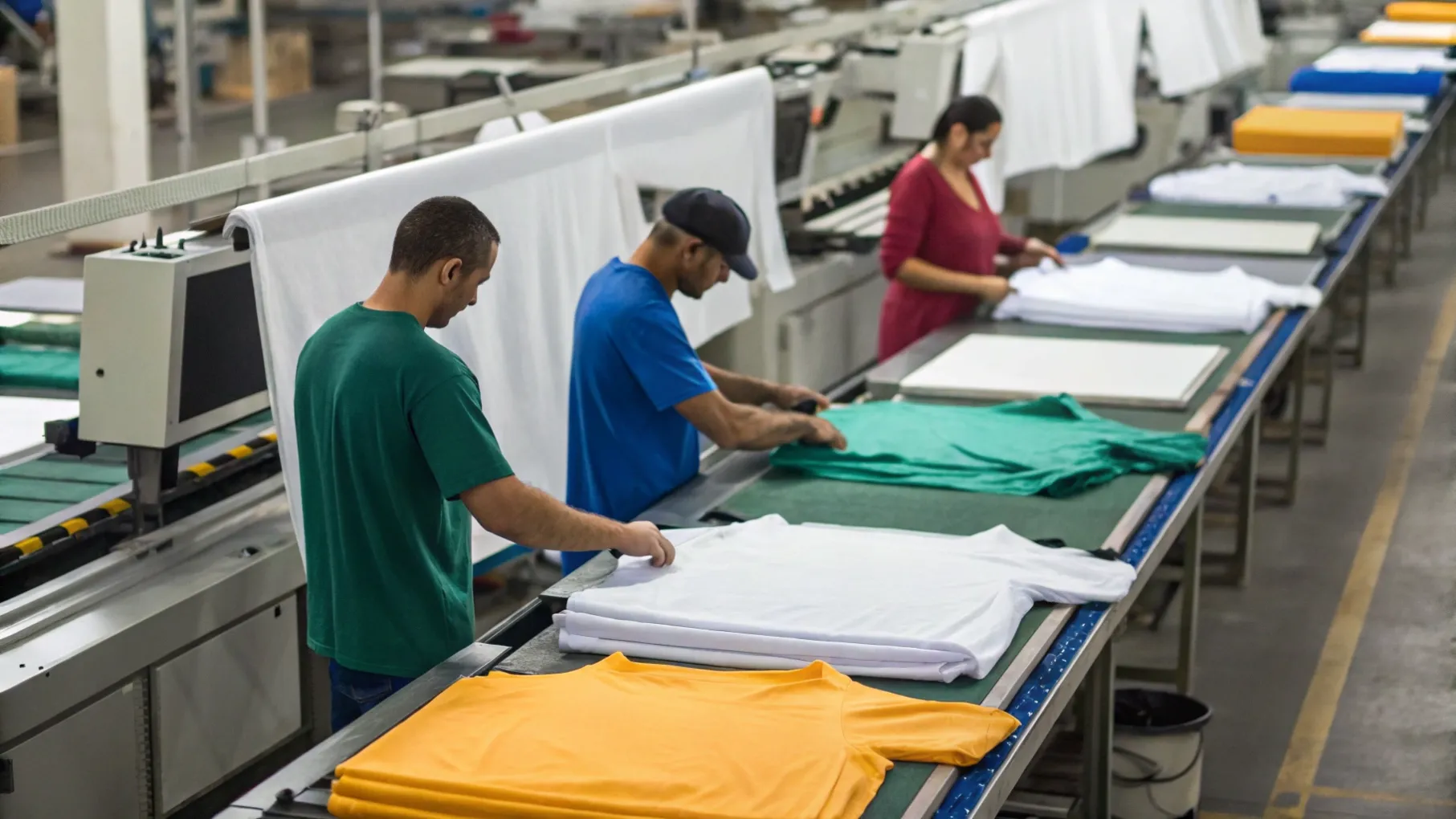
Industrial Workflow: From Vector Files to Heat Curing
The journey starts in the prepress department, where graphic designers convert raw artwork into clean vector paths and create color separations. In screen printing, each color channel is output onto positive film to burn individual mesh screens coated with photosensitive emulsion. In digital DTF and DTG pipelines, RIP (Raster Image Processor) software generates micro-dot ink maps, laying down a solid white ink underbase so colors pop on dark shirts.
Once prepped, blank shirts are loaded onto machine platens, sprayed with light adhesive or vacuum-clamped to prevent shifting. Inks are applied under pneumatic squeegee pressure or automated inkjet heads. The final step is conveyor curing: shirts pass through an industrial forced-air dryer at 150°C to 165°C (300°F to 330°F) for two to three minutes. This heat step is vital; if the ink core fails to cure completely, the artwork will wash out during the recipient's first laundry cycle.
Stage Number | Production Checkpoint | Critical Technical Requirement | Risk if Skipped or Mismanaged |
|---|---|---|---|
1. Prepress & Art RIP | Color separation & underbase creation | 300 DPI resolution / Vector line art | Blurry edges and dull colors on dark shirts |
2. Screen / Film Setup | Emulsion exposure or PET film coating | Exact micron-level registration alignment | Misaligned, overlapping print colors |
3. Garment Mounting | Platen placement and laser centering | Straight seam alignment (2-3 inches down) | Crooked, slanted, or off-center chest prints |
4. Ink Transfer / Print | Mechanical squeegee stroke or print head | Uniform pneumatic pressure and ink deposit | Uneven opacity and blotchy ink coverage |
5. Conveyor Curing | Forced-air infrared tunnel heating | 160°C core temperature for 120 seconds | Ink flaking, cracking, and wash-out failure |
Conclusion
Custom T-shirt printing transforms everyday clothing into lasting communication assets by pairing the right fabric blend with the ideal printing technology, ensuring your brand is represented with durability, sharpness, and comfort.