News & Insights
What Is the Best Way to Clean a Reusable Water Bottle?
Clean reusable water bottles daily with warm soapy water, scrub lids and straws thoroughly, and air-dry all components to prevent bacterial buildup.
What Is the Best Way to Clean a Reusable Water Bottle?
Most people refill their water bottles daily without ever giving them a proper scrub. A quick rinse under the tap leaves behind invisible bacteria, mouth oils, and trapped moisture that cause foul smells and mold. You can protect your health by adopting a simple, consistent cleaning routine.
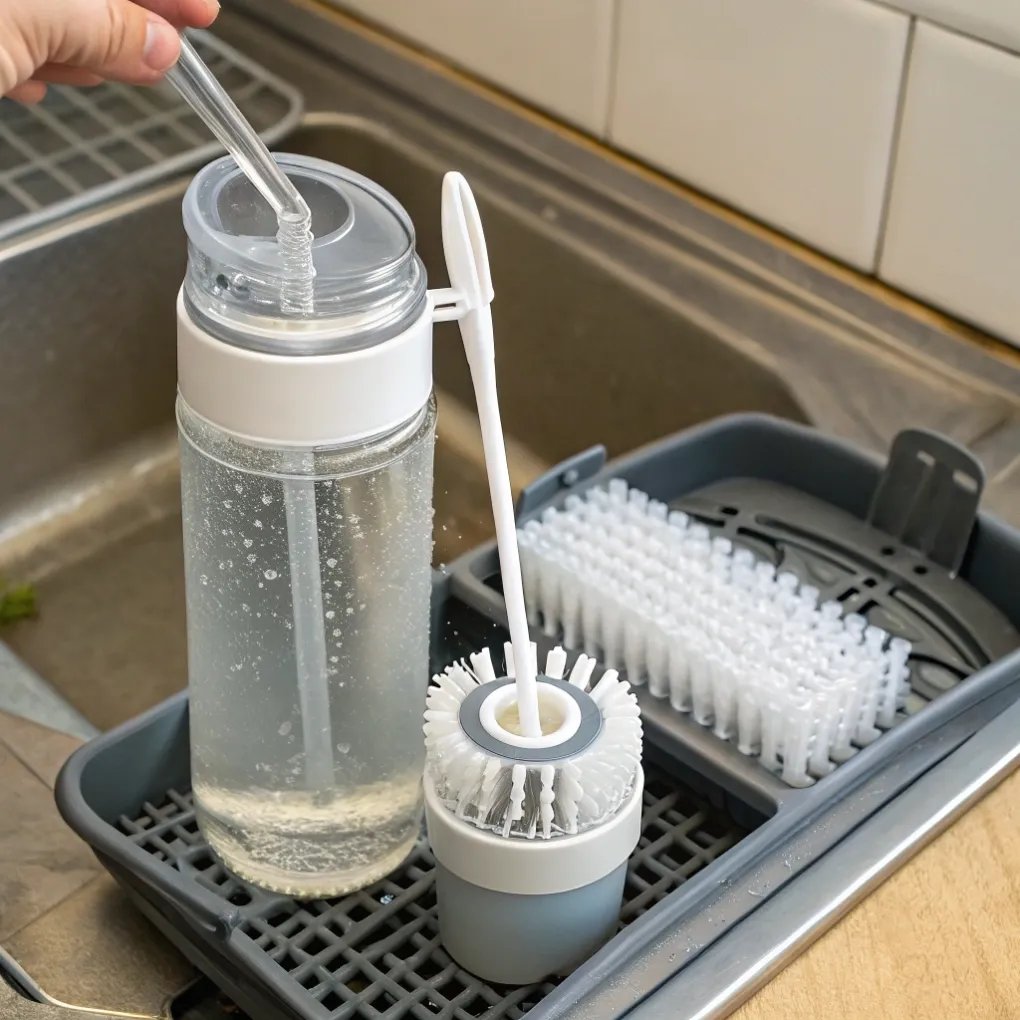
The best way to clean a reusable water bottle is to wash it daily with warm water and dish soap, scrub all interior surfaces and small lid crevices with specialized brushes, rinse thoroughly, and allow every component to air-dry completely before reassembling.
I spent my early career on factory floors inspecting steel finishing, plastic molding, and silicone seal assembly before founding Latitude Experience. I saw firsthand how moisture gets trapped in tiny production tolerances and lid grooves. Marketing managers like Jacky in Singapore frequently ask me how to care for branded corporate drinkware so their clients get years of use from them. I wrote this guide to show you the exact steps needed to keep your reusable bottle clean, fresh, and hygienic every single day.
How Do I Properly Clean Reusable Water Bottles?
Washing only the bottle body leaves dangerous buildup inside straws, spouts, and silicone gaskets. Skipping component disassembly causes persistent odors and dark mold spots hidden beneath rubber rings. You can fix this by following a structured daily cleaning method.
You properly clean reusable water bottles by disassembling all removable parts, scrubbing the main bottle interior with a bottle brush, cleaning narrow straw passages with a wire brush, and removing silicone seals to wash accumulated residue underneath.
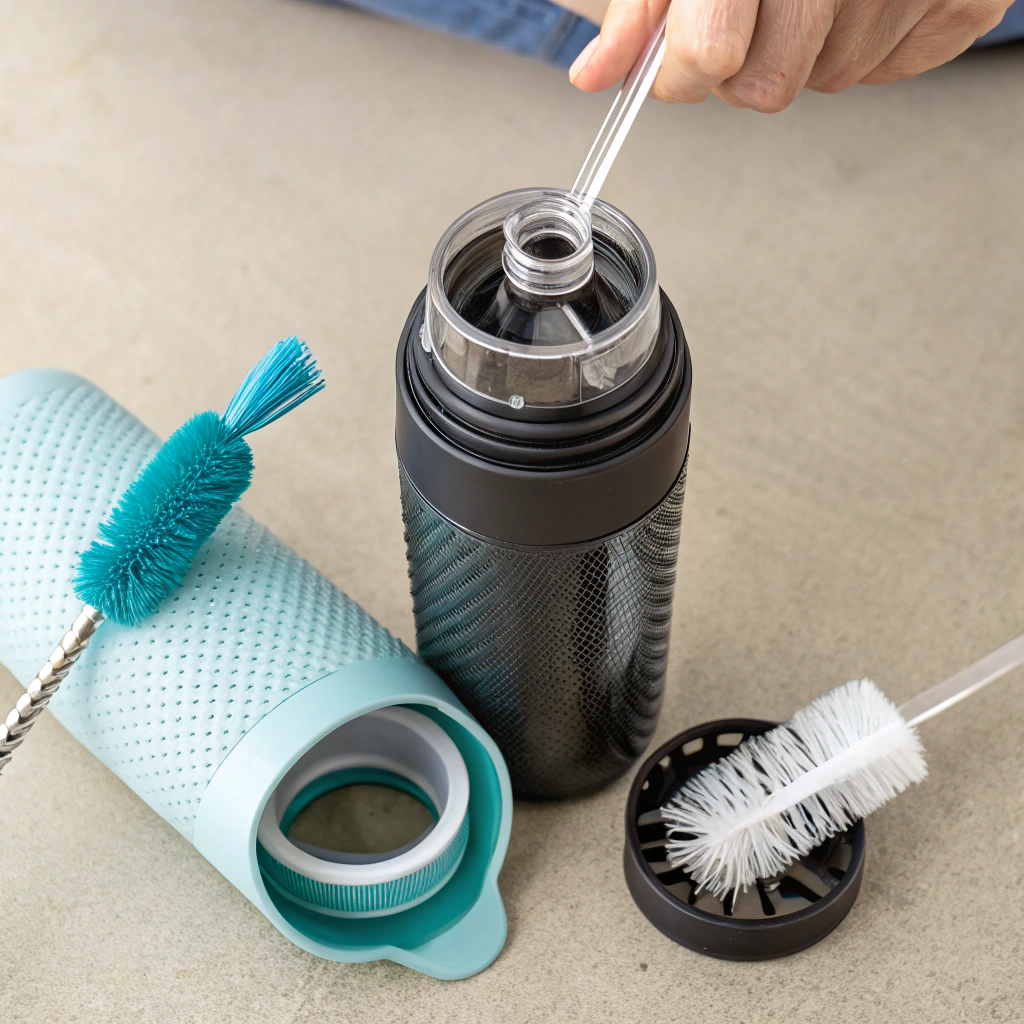
My factory quality-control experience taught me that most bottle hygiene failures happen in the lid mechanism rather than the bottle body. When you drink water, saliva, skin oils, and airborne dust collect around the mouthpiece threads and rubber gaskets. To clean your bottle correctly, pry out the flexible silicone seals using a blunt utensil once a week and wash them separately in warm soapy water. Use a dedicated narrow wire brush to clear out internal straw channels. Finally, place all washed components on a clean drying rack to air-dry separately. Never screw a wet cap onto a damp bottle body, as trapped moisture creates a breeding ground for unpleasant odors.
Proper Bottle Cleaning Routine Breakdown
Cleaning Stage | Target Component | Required Cleaning Tool | Operational Objective |
|---|---|---|---|
Step 1: Disassembly | Silicone gaskets, straws, flip lids | Hands or blunt seal tool | Exposes hidden grooves where moisture builds up |
Step 2: Interior Scrub | Main bottle body walls and base | Long-handled bottle brush | Removes surface biofilm and liquid residue |
Step 3: Detail Washing | Straws, mouthpieces, thread grooves | Wire straw brush and detail brush | Clears narrow drinking passages completely |
Step 4: Air-Drying | All separated components | Clean drying rack or towel | Eliminates trapped moisture before reassembly |
I always recommend choosing water bottles with simple, accessible lid designs. Fewer internal plastic parts make daily hand-washing fast and effortless.
Is It Safe to Reuse Water Bottles Without Washing Them?
Many people assume plain water is completely clean and requires no regular washing. Reusing a bottle for days without detergent allows bacteria from your mouth and hands to multiply rapidly across internal surfaces. You can avoid hygiene risks by learning how bacteria build up.
No, it is not safe to reuse water bottles indefinitely without washing them. Unwashed bottles accumulate skin bacteria, saliva enzymes, and environmental dust, forming a slippery bacterial biofilm across the interior walls within 24 to 48 hours.
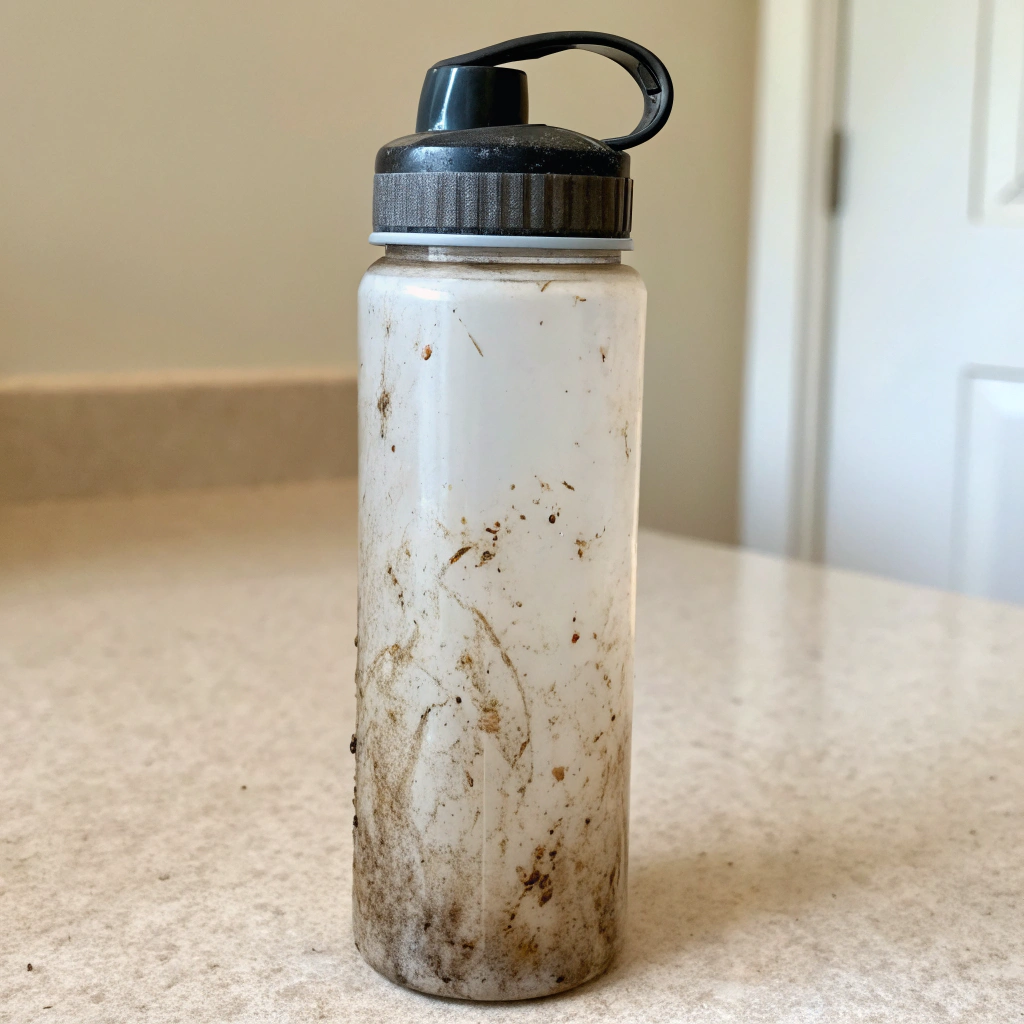
During my years testing drinkware materials, I observed how quickly organic matter settles on smooth surfaces. Every time your lips touch the mouthpiece, skin cells and mouth bacteria transfer into the bottle. If you leave water sitting at room temperature inside a dark bag, those bacteria multiply exponentially. You might notice a slick, slippery film along the inside bottom or a stale smell around the rim. That slippery feeling is a bacterial biofilm. While drinking from your own daily bacteria may not make you instantly sick, it can cause stomach upset, skin breakouts, and foul-tasting water. Daily soap-and-water washing breaks down these organic films completely.
Unwashed Bottle Contamination Risks
Time Without Washing | Surface Condition | Primary Risk Factor | Recommended Action |
|---|---|---|---|
24 Hours | Invisible bacterial transfer | Mouth bacteria growth on mouthpiece | Quick rinse and scrub with warm soapy water |
48 to 72 Hours | Slippery internal biofilm forms | Odors, stale taste, and bacterial buildup | Thorough scrub of bottle body, lid, and seals |
1 Week or More | Visible dark mold or mildew spots | Respiratory irritation and upset stomach | Full disassembly, deep scrub, or seal replacement |
I advise everyone to give their daily bottle a full soap-and-water scrub at the end of every workday. Treating your water bottle like any other eating utensil ensures total safety.
How Long Can You Reuse a Water Bottle Before Washing It?
Busy schedules make people push off routine dishwashing for days at a time. Leaving water sitting in damp containers for extended periods creates stale odors and ruins your drinking experience. You can maintain fresh water by sticking to a clear washing schedule.
You should reuse a water bottle for a maximum of 24 hours before washing it thoroughly. If you fill your bottle with sports drinks, juices, or protein mixes, you must wash it immediately after finishing the beverage.
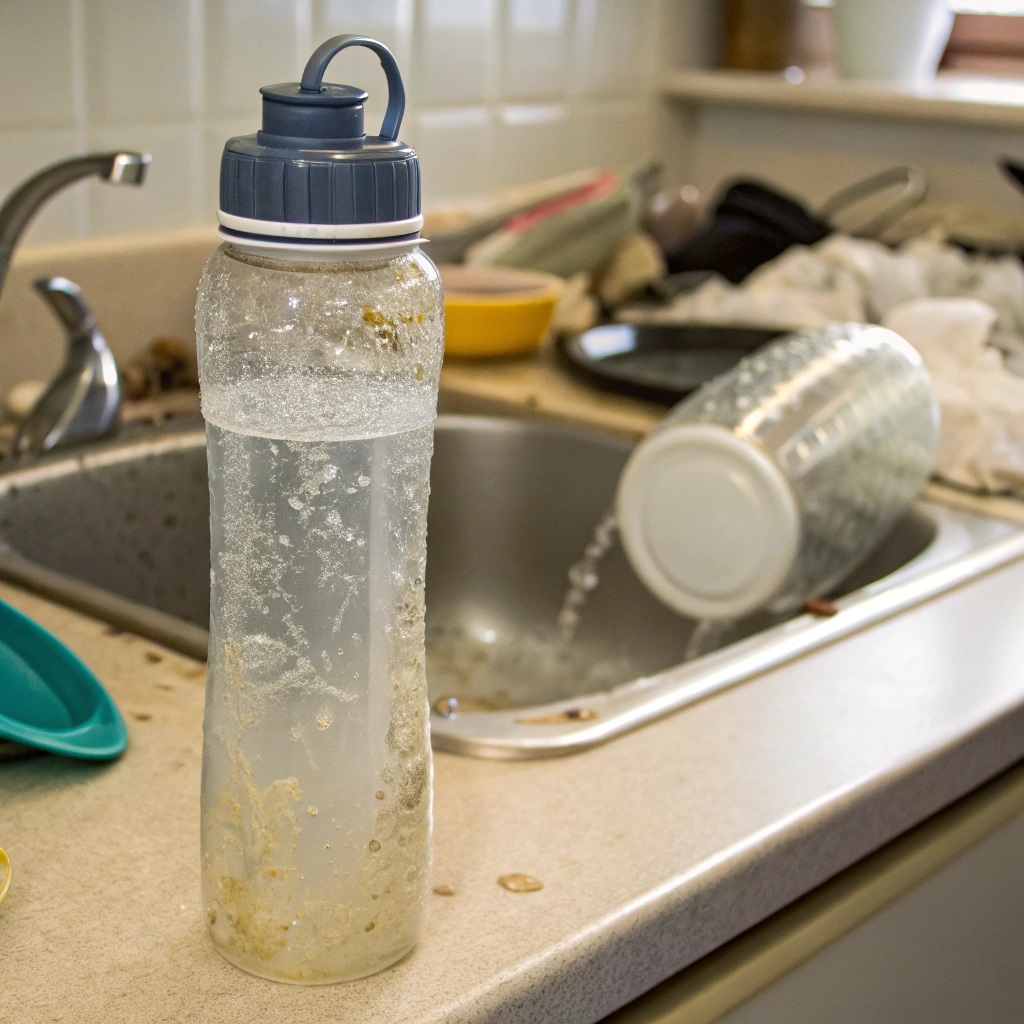
Water contains trace minerals, but sugary or flavored drinks leave behind carbohydrates that accelerate mold growth. If you pour a sports drink into an insulated steel bottle and leave it unwashed overnight, fungal spores will colonize the silicone seals by morning. For plain tap water, a strict 24-hour wash cycle keeps the bottle fresh and safe. If you travel or work outdoors under direct heat, wash your bottle even more frequently because warmth speeds up microbial growth. Sticking to a disciplined daily routine prevents permanent odor retention and keeps your drinkware in prime condition for years.
Recommended Cleaning Frequency Guide
Liquid Type Carried | Maximum Safe Usage Window | Required Cleaning Action |
|---|---|---|
Plain Filtered Water | 24 Hours (Daily wash) | Wash body and lid with soap and warm water |
Flavored / Sports Drinks | Wash immediately after use | Deep scrub of straw, lid grooves, and main body |
Protein or Dairy Shakes | Wash within 2 hours of use | Immediate rinse, hot soap soak, and detail brush scrub |
I inspect sample drinkware at Latitude Experience by testing how easily lids can be sanitized after heavy use. Simple designs with removable seals make sticking to a 24-hour cleaning schedule easy.
Conclusion
The best way to clean a reusable water bottle is to wash it daily using warm soapy water, scrub every crevice and straw with detail brushes, and air-dry all separated components completely to maintain optimal hygiene.