Sep 20, 2026Services Overview
What Materials Are in a Paper Bag?
Learn what materials are used in paper bags, including paper fibers, coatings, adhesives, handles, and printing elements, and how each component affects strength, sustainability, and functionality.
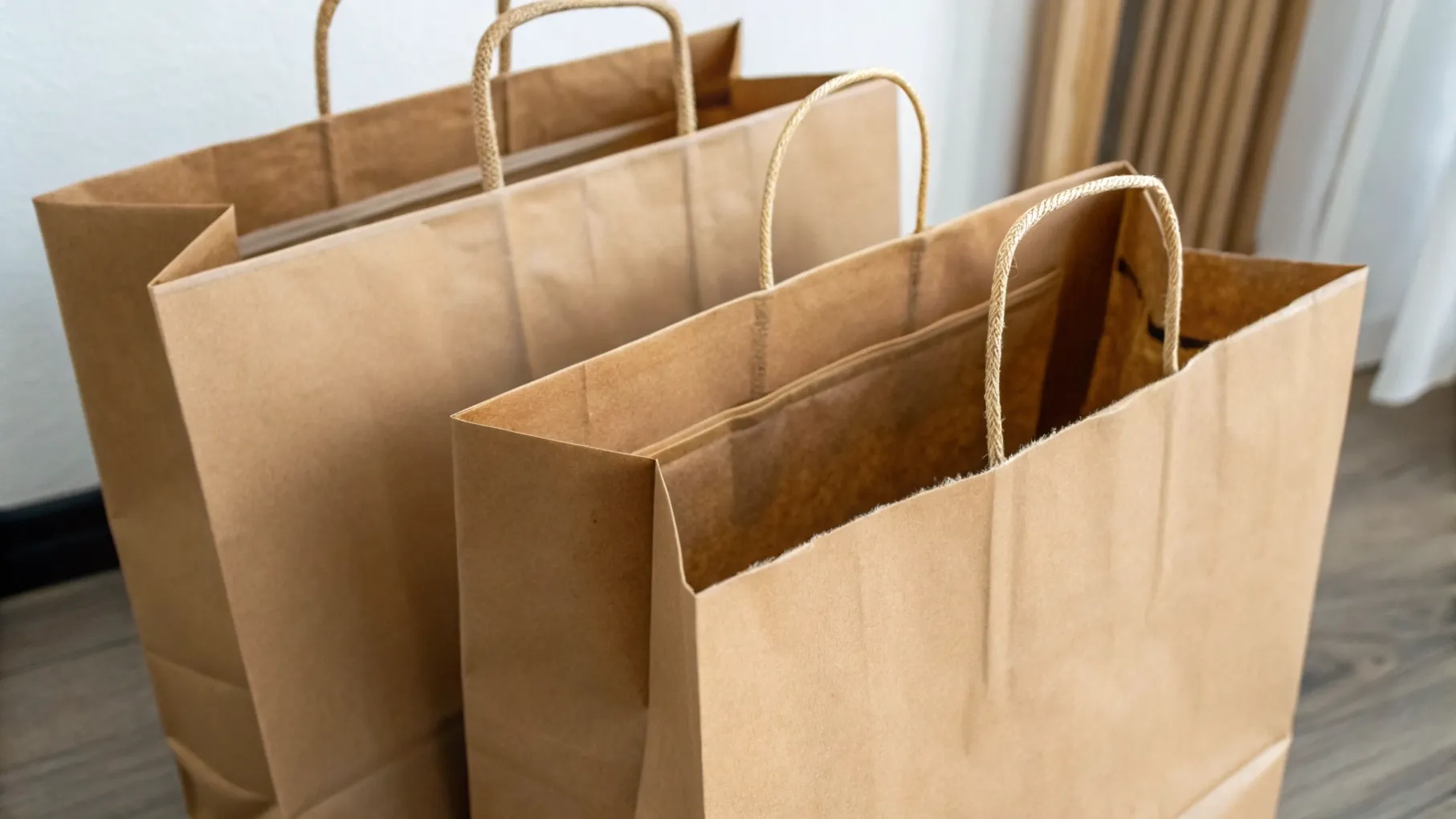
What Materials Are in a Paper Bag?
Assuming a paper bag is made only of paper leads to broken packaging and spilled items. Commercial paper bags rely on multiple materials working together to bear heavy loads and look professional.
A commercial paper bag is an engineered packaging system typically composed of virgin or recycled kraft paper pulp, water-based starch or hot-melt adhesives, soy or water-based inks, structural cardboard reinforcements, and handle cords made from paper, cotton, or synthetic fibers.
During my early days inside printing factories, I watched seams split open simply because a plant used the wrong glue formula on heavy paper. Brand managers like Jacky know that your packaging is the final physical interaction with a client. Understanding every material layer ensures your bags remain durable, attractive, and functional.
What Material Are Paper Bags Made Of?
Picking paper bags from a catalog without checking material specs often leads to tearing. If you select the wrong base fiber, your bags can snap under ordinary loads.
Paper bags are primarily made from chemical kraft pulp derived from softwood trees, semi-chemical recycled paper pulp, water-based binding adhesives, protective paperboard inserts, and twisted paper cords or cotton ribbons.

The Multi-Component Structure of Commercial Paper Bags
In my manufacturing career, I learned that a finished paper carrier is rarely a single-substance product. The main body uses wood pulp processed through the kraft chemical method. This process retains long cellulose fibers that give the paper high tensile and burst strength. Brown kraft paper keeps its natural wood color, while white kraft paper goes through an oxygen or chlorine-free bleaching bath to create a clean surface for sharp logo printing.
Beyond the paper sheet, hidden materials determine whether the bag survives real-world use. Fast-setting water-based dextrin or synthetic hot-melt adhesives seal the longitudinal tube seams and block-bottom folds. If the glue bond is brittle, the seam splits under weight even if the paper stays intact. High-stress zones, such as top rims and base gussets, require thick unbleached cardboard inserts to prevent handle tear-out and bottom sag.
Component Part | Standard Material Used | High-End Alternative | Functional Purpose |
|---|---|---|---|
Bag Body Wall | 100–120 GSM Brown Kraft Paper | 180–250 GSM Coated Art Card | Provides tensile strength and exterior print surface |
Seam & Base Binder | Water-based starch/dextrin adhesive | Heavy-duty EVA hot-melt glue | Bonds paper folds securely under continuous load |
Handle Cords | Twisted virgin kraft paper cord | Knotted cotton rope or satin ribbon | Distributes carrying weight comfortably across fingers |
Structural Base | Single folded paper bottom | 300+ GSM greyboard card insert | Prevents heavy product corners from puncturing the base |
Do Paper Bags Have Plastic in Them?
Many buyers believe all paper packaging is entirely plastic-free and easy to compost. In reality, modern moisture barriers and glossy surface finishes often add hidden synthetic polymers.
Standard brown kraft shopping bags contain zero plastic, but luxury boutique bags and takeaway food containers often include plastic via polypropylene (PP) film lamination, polyethylene (PE) grease linings, or polyester handle cords.
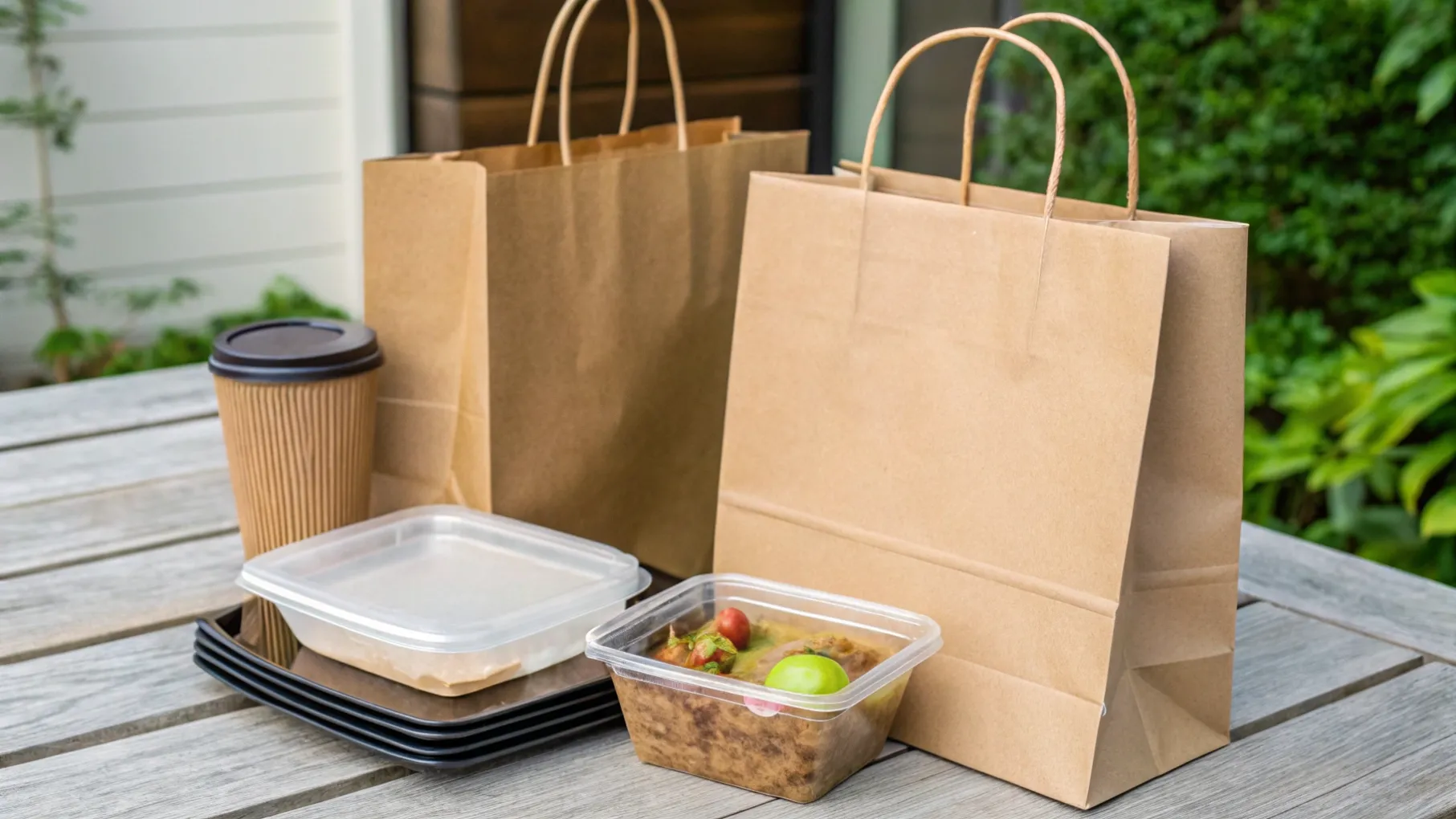
Identifying Hidden Synthetic Layers and Coatings
I always advise clients to verify surface treatments before claiming a bag is one hundred percent biodegradable. If your company orders luxury retail bags with high-gloss or soft-touch finishes, the factory applies a micron-thin biaxially oriented polypropylene (BOPP) film using heat and pressure. That plastic film prevents scuffing and resists rain, but it blocks paper pulping machinery during municipal recycling.
Food service packaging creates another common pitfall. Takeaway paper bags designed for fried snacks or cold drinks frequently feature an extruded polyethylene (PE) coating inside the base. This thin plastic film stops grease and condensation from softening the bottom seam. If a brand manager like Jacky wants a truly compostable bag, he must specify water-based aqueous dispersion coatings or plant-based polylactic acid (PLA) linings instead of traditional petroleum-based polymers.
Bag Feature | Plastic-Free Specification | Plastic-Containing Specification | Recycling Stream Impact |
|---|---|---|---|
Surface Finish | Uncoated natural kraft / matte aqueous varnish | Glossy or matte thermal BOPP film | Plastic films must be mechanically screened out |
Moisture Barrier | Water-based dispersion barrier | Polyethylene (PE) heat-seal extrusion | Requires specialized plastic separation mills |
Handle Attachment | Glued paper patch with paper cord | Polypropylene rope or plastic clips | Synthetic cords contaminate standard paper pulp |
Reinforcement Card | Recycled pulp chipboard | Plastic-coated synthetic card | Non-biodegradable synthetic particles enter soil |
How Is a Paper Bag Made?
Visualizing automated factory equipment helps you specify realistic order dimensions and artwork layouts. Custom packaging errors often occur because designers ignore how machines fold and glue paper rolls.
A paper bag is made by unwinding a large kraft paper roll, printing artwork via flexographic or offset presses, forming a glued paper tube, cutting individual bag lengths, folding the block bottom, and securing handles.
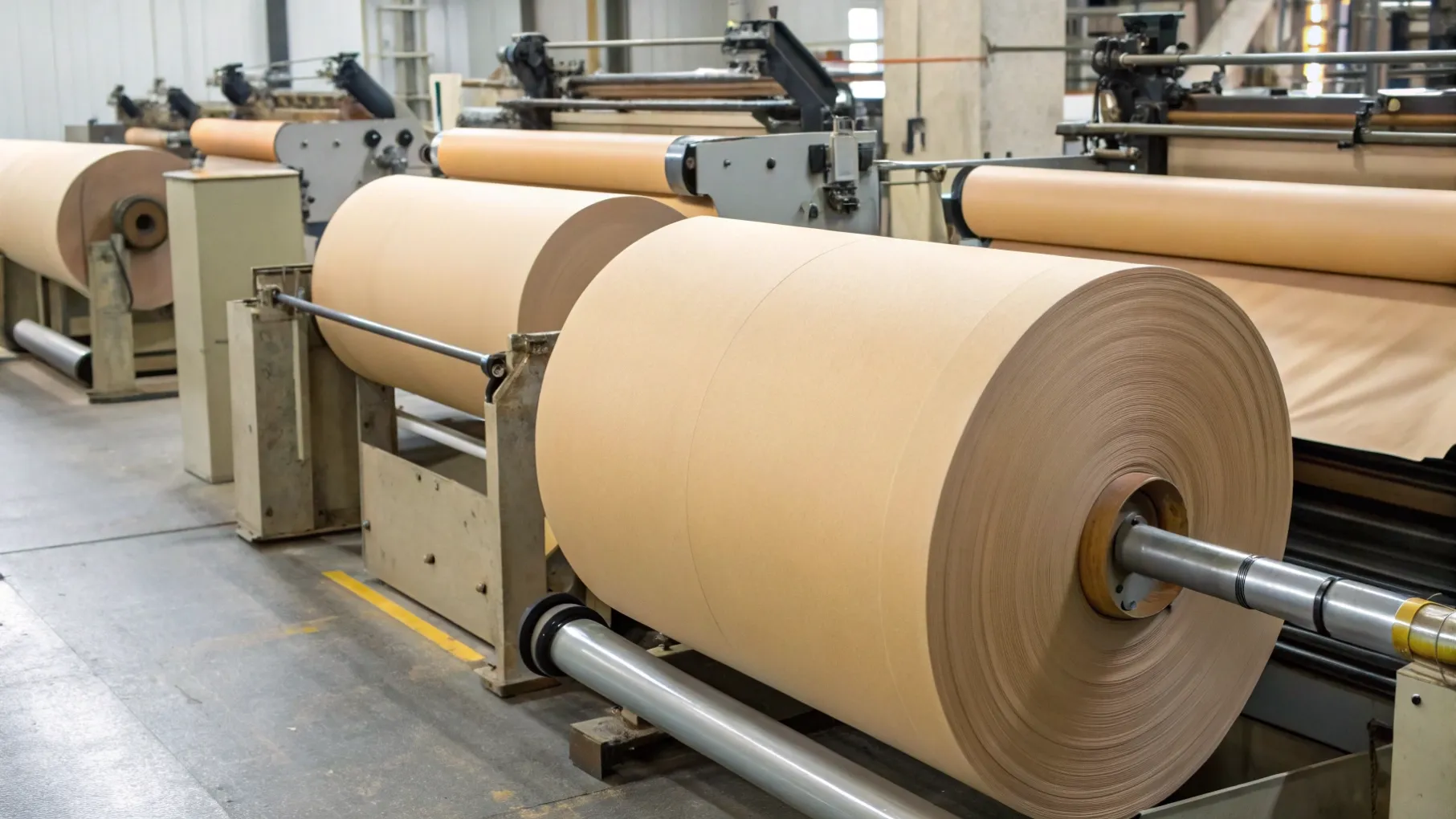
The Automated Manufacturing Sequence
Watching high-speed conversion lines in a packaging facility reveals how precise every step must be. Production begins with giant mother rolls of kraft paper mounted onto automated unwinding stands. The paper web moves directly into an in-line printing unit, where high-speed rollers apply water-based inks to the continuous paper sheet. After the ink dries under warm air fans, the flat paper passes through folding plates that shape it into a continuous flat tube while a glue wheel applies adhesive along the side seam.
Next, a rotary blade cuts the continuous paper tube into individual bag sleeves. Mechanical fingers open the cut ends, fold the bottom gusset into a flat hexagonal shape, insert a strengthening card, apply bottom adhesive, and seal the base closed. For handled shopping carriers, an automated handle applicator forms twisted paper cords, glues them between two paper reinforcement patches, and presses them firmly onto the interior upper rim before packing the finished bags into shipping cartons.
Manufacturing Stage | Machine Action | Critical Material Monitored | Quality Inspection Check |
|---|---|---|---|
1. Roll Printing | Applies custom branding inks | Water-based flexographic ink viscosity | Checks color registration and logo alignment |
2. Tube Forming | Folds flat web into cylinder shape | Side-seam cold emulsion glue | Verifies fold width and glue line coverage |
3. Bottom Folding | Forms flat rectangular base | Heavy-duty block-bottom adhesive | Tests seam adhesion and bottom leak resistance |
4. Handle Insertion | Forms and bonds handle patches | Hot-melt EVA glue with paper/cotton cord | Conducts static pull-strength load tests |
Conclusion
A commercial paper bag is an engineered structure made of kraft paper, adhesives, inks, reinforcements, and handles. Choosing the right material mix ensures your packaging protects merchandise securely while keeping production costs balanced.