Sep 11, 2026News & Insights
What’s So Great About Moleskine Notebooks?
Moleskine notebooks combine minimalist design, durable binding, portability, and creative appeal, making everyday writing feel more intentional despite their premium price.

What’s So Great About Moleskine Notebooks?
Do you look at a $25 Moleskine notebook and wonder why millions of professionals pay a premium for plain paper bound between covers? Buying stationery based purely on luxury reputation leads to disappointment if the physical paper does not match your writing tools.
What makes Moleskine notebooks great is their timeless minimalist design, reliable lay-flat thread binding, portable form factor, and the psychological sense that your ideas are being recorded in something permanent and intentional.
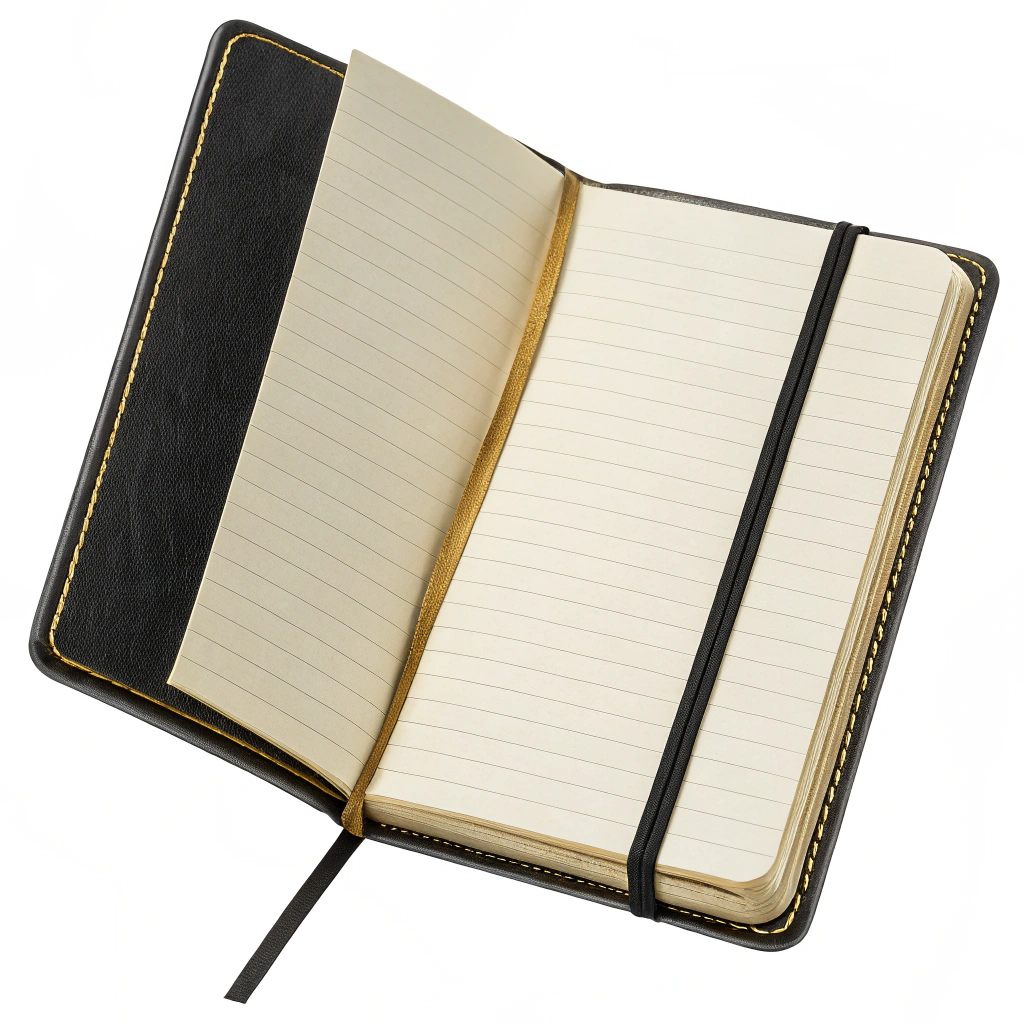
When I started my career working in a printing and bookbinding factory years ago, I handled countless paper stocks, bookcloth covers, and binding adhesives. Moleskine did not invent the black bound journal, but they mastered the art of transforming an everyday commodity into a cultural tool for thinkers, designers, and writers. Let us examine whether a Moleskine is truly worth the cost, why it commands a premium price, and which models remain the most popular worldwide.
Is a Moleskine Notebook Worth It?
Are you hesitating to buy a premium notebook because you fear cheap ballpoint ink will bleed through or the spine will split under daily use? Determining real value requires looking past the brand heritage and evaluating physical performance.
A Moleskine notebook is worth it if you prioritize portable everyday carry, lay-flat thread-bound ergonomics, and standard ballpoint or pencil writing, but it is not worth it if you primarily use wet fountain pens or heavy liquid ink.
Writing Friction, Paper Sizing, and Pen Compatibility
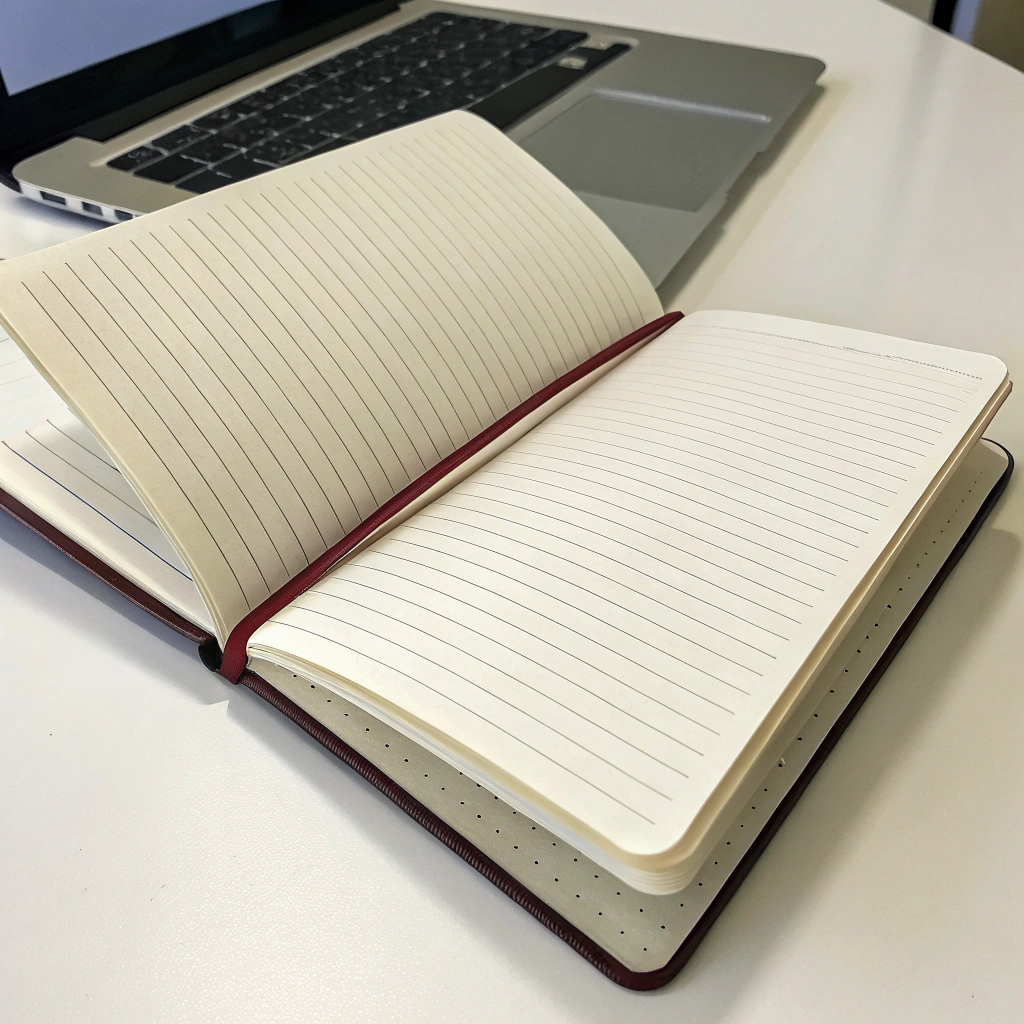
The value of any notebook comes down to the relationship between the paper fibers and your writing instrument. Standard Moleskine Classic notebooks feature 70 GSM ivory-tinted, acid-free paper. This lightweight paper keeps the notebook remarkably slim and light in a briefcase, but it has minimal internal sizing (the gelatin or chemical coating that prevents liquid ink from soaking into raw pulp).
If you write with gel pens, rollerballs, or fountain pens, standard 70 GSM Moleskine paper exhibits noticeable “ghosting” (show-through on the reverse side) and occasional ink feathering. However, if your daily workflow relies on standard oil-based ballpoints, fineliners, or graphite pencils, the smooth ivory paper offers a pleasant tactile glide. For marketing managers like Jacky who carry journals into boardroom meetings and transit flights, its slim spine and sturdy binding provide a dependable writing surface anywhere.
Writing Instrument | Performance on 70 GSM Moleskine | Ghosting / Show-Through | Sizing Recommendation |
|---|---|---|---|
Oil-Based Ballpoint (e.g., Bic, Parker) | Exceptional; smooth, clean line | None to Minimal | Perfect for everyday fast notes |
Graphite Pencil & Colored Pencils | Excellent; gentle tooth holds lead | Completely Zero | Ideal for quick sketches and drafts |
Gel Pens & Fine Rollerballs (0.5 mm) | Moderate; depends on wetness | Moderate Show-Through | Test ink flow on back test page |
Wet Fountain Pens & Calligraphy Inks | Poor; ink feathers and bleeds through | Heavy Bleed-Through | Switch to 100+ GSM or Rhodia/Leuchtturm |
Why Are Moleskines So Expensive?
Have you ever wondered why a notebook with synthetic leatherette and 70 GSM paper costs three to four times more than standard office stationery? The price tag reflects a mix of industrial binding details and legendary lifestyle branding.
Moleskines are expensive because of proprietary Smyth-sewn binding that allows the book to open flat 180 degrees, strict design consistency, global retail distribution, and massive brand equity built around creative heritage.
Manufacturing Mechanics, Book Architecture, and Brand Equity
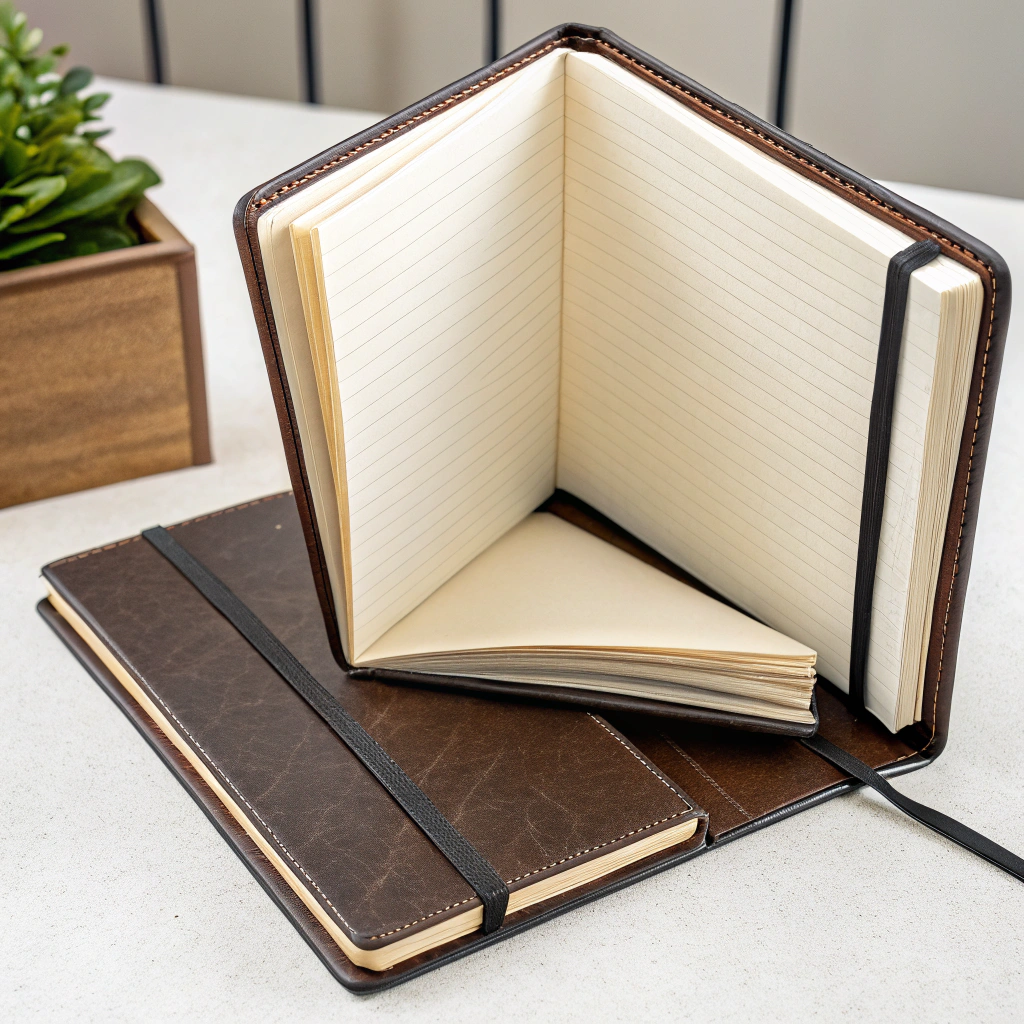
From a manufacturing perspective, Moleskine uses Smyth-sewn binding rather than cheap adhesive-only “perfect binding.” Individual folded paper signatures are stitched together with thread before being glued to the spine mesh. This mechanical process allows the notebook to lie completely flat on a table without snapping the spine or ejecting loose leaves over months of heavy flexing.
Beyond structural assembly, you are paying for global lifestyle positioning. Moleskine resurrects the legendary aesthetic of the unbranded black oilcloth notebooks used by Vincent van Gogh, Pablo Picasso, and Ernest Hemingway. When consumers buy a Moleskine, they are not buying raw pulp by the pound; they are buying an aspirational creative identity. That emotional connection allows the brand to command luxury margins in airport boutiques and bookstore fronts worldwide.
Construction Feature | Commodity Spiral / Glued Pad | Moleskine Classic Construction | Value Delivered to User |
|---|---|---|---|
Spine Binding Method | Cold glue / metal spiral wire | Smyth-sewn signature thread binding | Lies 180° flat; zero lost pages |
Cover Finishing | Thin cardstock or brittle PVC | Oilcloth-textured bound hardcover | Protects notes against rain and bag friction |
Integrated Features | None (Just loose perforated paper) | Elastic band, ribbon marker, inner pocket | Keeps loose receipts and business cards secure |
Page Geometry | Sharp raw-cut right-angle corners | Die-cut smooth rounded corners | Prevents dog-eared, frayed corner edges |
What Is the Most Popular Moleskine Notebook?
Are you confused by Moleskine’s wide range of pocket sizes, art sketchbooks, expanded editions, and page layouts? Choosing the wrong dimensions or ruling can make writing feel cramped or overly demanding.
The most popular Moleskine notebook is the Classic Hard Cover Notebook in Large (5 × 8.25 inches / 13 × 21 cm) with Ruled or Dotted pages in iconic Black.
Sizing Proportions, Internal Rulings, and Corporate Popularity
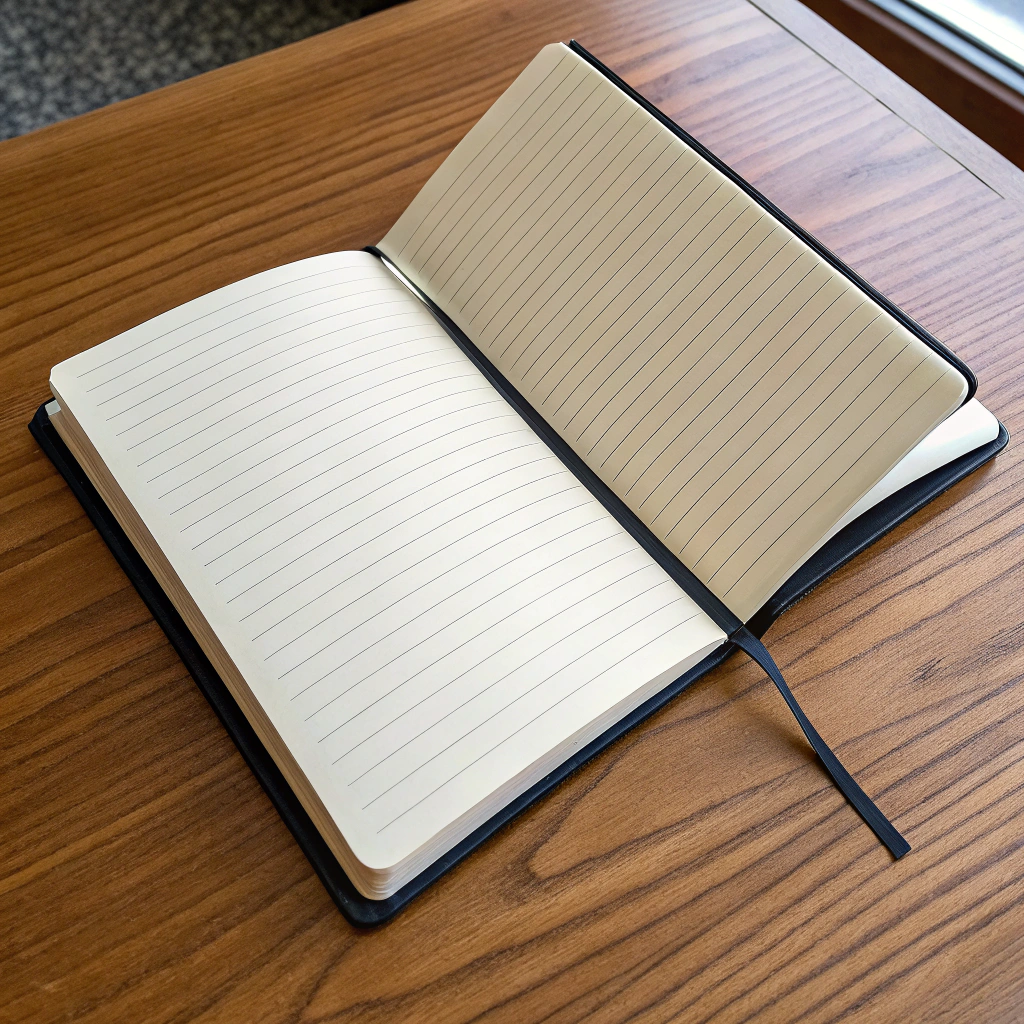
The “Large” Moleskine is practically synonymous with the brand. Measuring 13 × 21 cm, it is slightly narrower than standard international A5 paper (14.8 × 21 cm). This proprietary, slender profile makes it exceptionally comfortable to grip in one hand while walking through an exhibition or riding a train, while still slipping easily into everyday laptop sleeves and messenger bags.
For corporate gifting and executive branding, the Classic Large Hard Cover remains the gold standard. The rigid cover acts as a stable lap-desk when taking meeting minutes in auditoriums without desks. Its smooth synthetic leatherette surface takes blind debossing and gold foil stamping with crisp, sharp definition. Paired with the expandable inner accordion pocket in the back cover, it provides a refined, complete business tool that clients keep on their desks for years.
Popular Moleskine Model | Dimensions & Page Count | Ruling Style | Best Use Scenario |
|---|---|---|---|
Classic Large Hard Cover (The Flagship) | 13 × 21 cm (5 × 8.25 in) / 240 Pages | Ruled or Dot-Grid | Executive meetings, daily journaling, BuJo |
Classic Pocket Soft Cover | 9 × 14 cm (3.5 × 5.5 in) / 192 Pages | Plain or Ruled | Rapid field notes, pocket carry, daily commute |
Classic Expanded Large | 13 × 21 cm (5 × 8.25 in) / 400 Pages | Ruled or Dotted | Multi-year projects and comprehensive archives |
Cahier Journal (3-Pack) | 13 × 21 cm / Flexible heavy cardboard | Ruled with tear-out back | Lightweight project sprints and student logs |
Conclusion
Moleskine notebooks succeed not because they have the thickest paper, but because their disciplined design, lay-flat thread binding, and timeless aesthetic make everyday writing feel deliberate, portable, and permanent.