Jul 10, 2026News & Insights
Which Is Best Copper or Stainless Steel Water Bottles?
Stainless steel bottles are safer, more durable, easier to maintain, and better insulated than copper, making them ideal for everyday hydration.
Which Is Best Copper or Stainless Steel Water Bottles?
Are you feeling completely overwhelmed by conflicting marketing claims praising traditional copper vessels for holistic wellness, while other experts insist that heavy-duty metal alloys are the only safe option for daily use? Choosing a container based on hype can ruin your favorite everyday beverages and leave you with a high-maintenance chore.
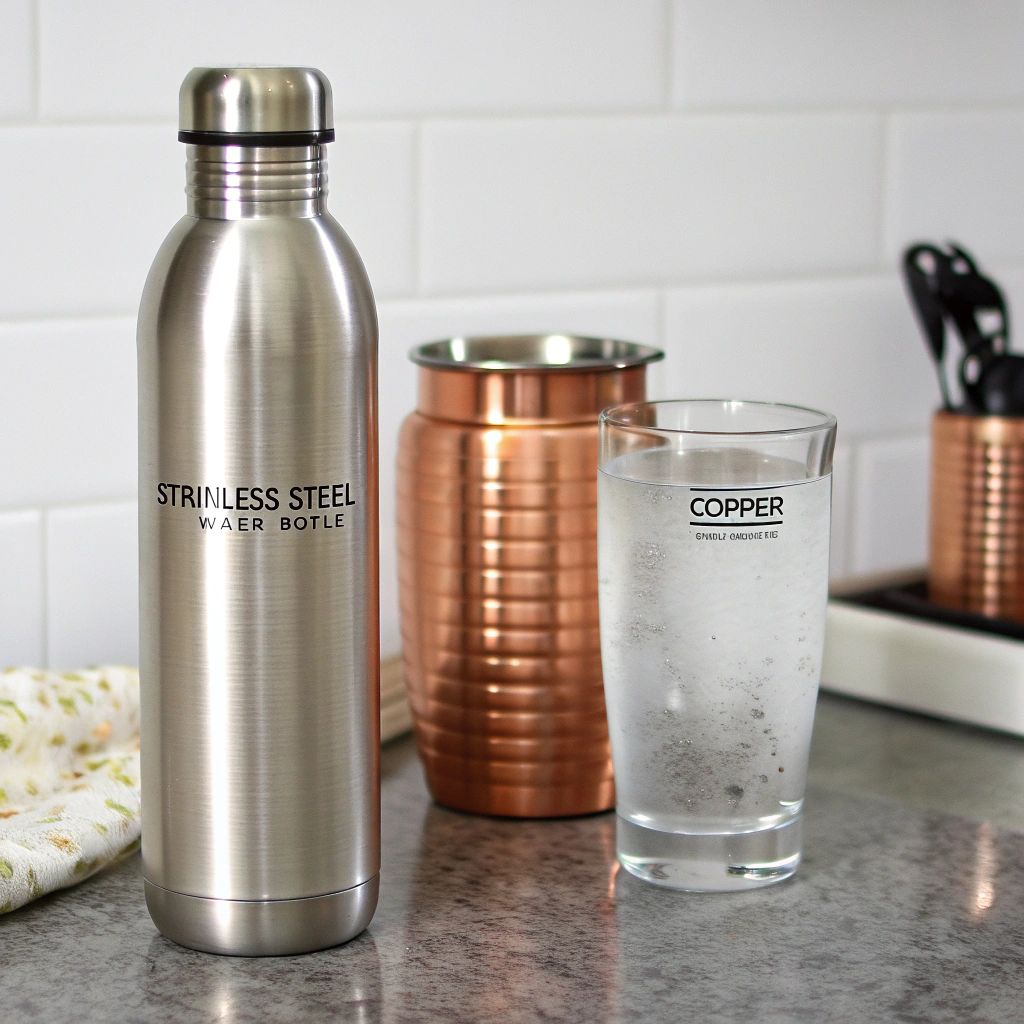
Stainless steel water bottles are significantly better than copper models for the vast majority of consumers because of their total flavor neutrality, absolute safety with acidic liquids, and ability to utilize advanced double-wall vacuum insulation to keep drinks ice-cold.
I started my career working directly on a busy printing factory floor, checking product material weights and testing structural durability thresholds under tough daily conditions. That production background taught me that raw metals behave in vastly different ways when they interact with moisture, heat, and organic acids over long periods. Later, I founded Latitude Experience Pte Ltd to help corporate branding managers select premium, highly functional promotional gifts that protect health and look incredibly modern. I know that carrying a heavy, reactive container quickly becomes an annoying physical burden rather than a useful tool. Let us look at the factual material trade-offs, health implications, and operational realities to help you pick the ultimate daily hydration asset.
Are Copper Water Bottles Better than Stainless?
Do you find yourself constantly worrying that your travel mug might be subtly leaching metallic elements into your system, or that your current container restricts what kinds of juices you can safely mix inside it?
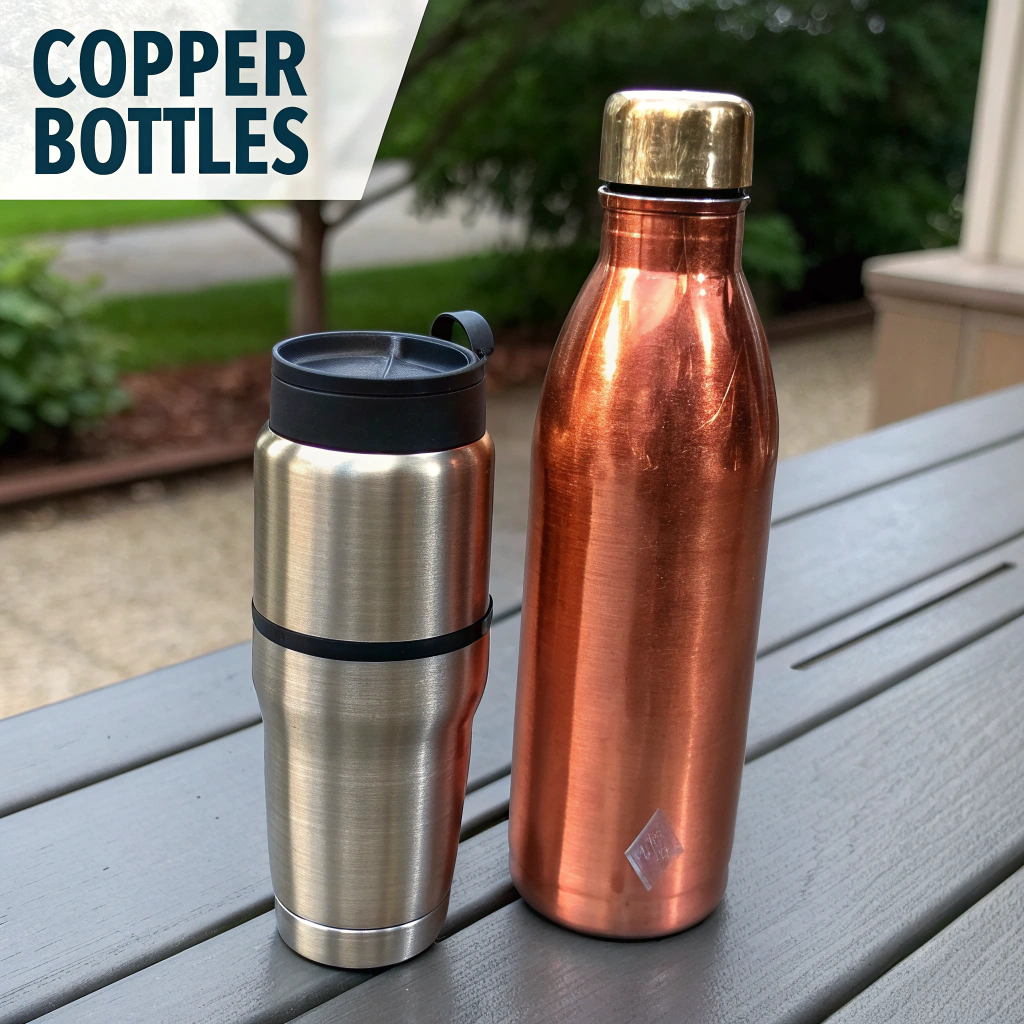
Copper bottles are absolutely not better than stainless steel for modern daily use. While copper has historical cultural appeal, it is a highly reactive metal that can cause severe stomach irritation if it comes into contact with anything other than plain water.
The Reality of Material Reactivity
From my perspective, the trail environment and the office desk change your product requirements completely. High-grade 304 stainless steel is completely non-porous and chemically inert, meaning it forms a self-healing oxide layer that stops corrosion entirely. You can pour boiling coffee, iced lemon water, or sugary sports electrolyte mixes inside a steel flask without any chemical reaction or flavor retention. Copper, by comparison, reacts aggressively with acids. If you try to drink fresh lemonade out of an unlined copper vessel, the citric acid will strip the metal atoms right into the liquid, altering the taste completely and creating a high risk of heavy metal poisoning.
Let us look at how these two metal formats compare across critical everyday performance metrics.
Material Performance Attribute | Pure Untreated Copper | 304 Food-Grade Stainless Steel |
|---|---|---|
Beverage Versatility | Plain, unflavored water only | All liquids (Coffee, juices, tea, water) |
Temperature Retention | Poor (Single walls lose heat instantly) | Maximum (Holds ice-cold for 24 hours) |
Dishwasher Cleaning | Completely unsafe (Will tarnish) | High safety threshold for main bodies |
Internal Surface Defense | Oxidizes rapidly, forming green spots | Resists rust and chemical pitting |
What Is the Healthiest Material for a Water Bottle?
Are you trying to eliminate toxic bisphenols, microplastics, and dangerous chemical stabilizers from your household’s daily diet to protect your family’s long-term well-being?
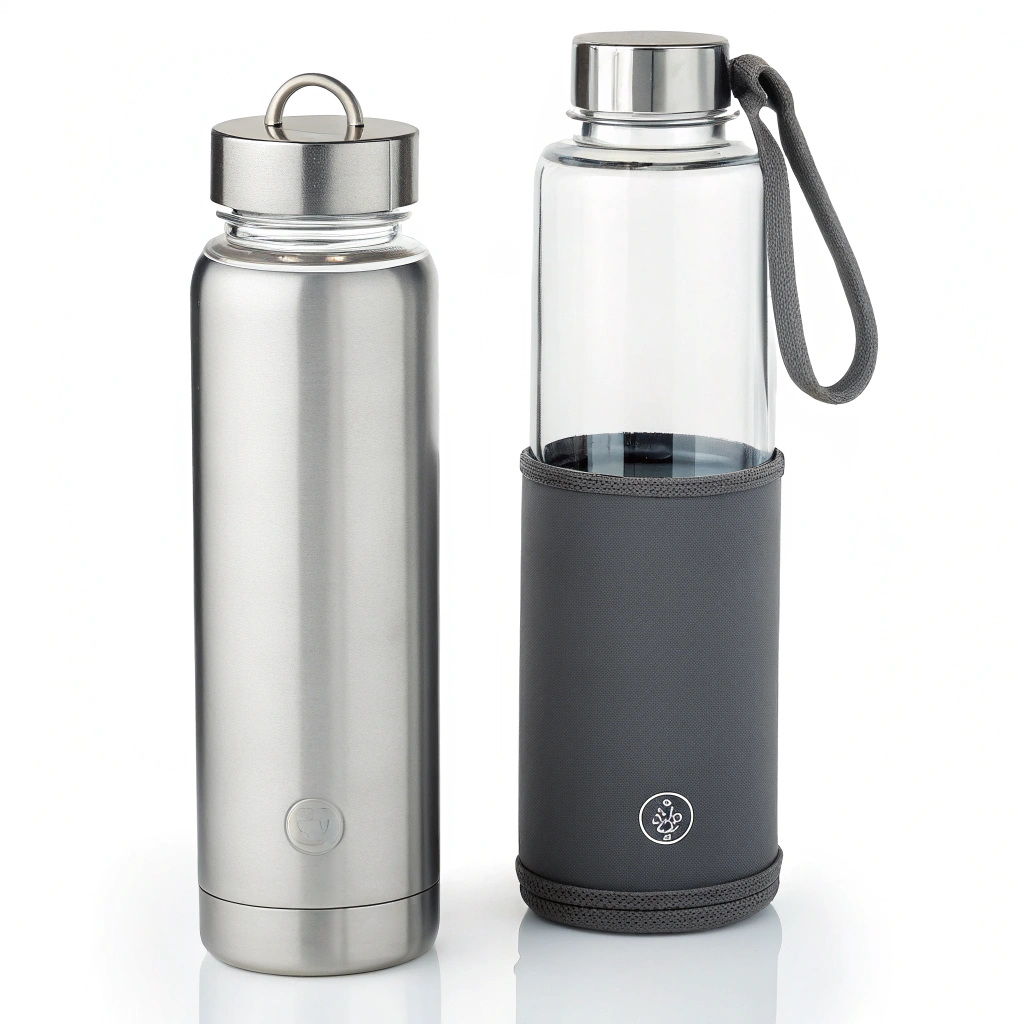
The healthiest materials for a reusable water bottle are food-grade 18/8 (304) stainless steel and medical-grade borosilicate glass. Both substances are completely non-toxic, non-porous, and stable under extreme heat, ensuring they never leach chemicals or microparticles into your clean drinking supply.
Ensuring Pure Chemical Safety
In my years of managing product dimensions and custom manufacturing quality control, I learned that material density dictates safety. Cheaper synthetic plastic containers can slowly break down and shed millions of microscopic plastic shards into your water when exposed to warm sunlight or repeated dishwashing cycles. Premium stainless steel avoids this issue entirely because it is a solid mineral alloy that requires zero internal plastic liners or chemical spray coatings to stay waterproof. It provides a perfectly stable, sterile environment that keeps your beverage tasting crisp and clean.
Let us map out the primary health characteristics of top container materials to guide your next family purchase.
Bottle Base Material | Chemical Leaching Risk | Thermal Stability Grade | Core Wellness Advantage |
|---|---|---|---|
304 Stainless Steel | Zero Risk | Exceptionally High | Never degrades or sheds microplastics |
Borosilicate Glass | Zero Risk | High (Thermal shock proof) | Completely flavor neutral and pure |
BPA-Free Tritan Plastic | Low | Moderate | Lightweight but sheds nano-shards |
Low-Grade Aluminum | High (Requires plastic lining) | Low | Light but can chip and expose metal |
What Are the Disadvantages of Copper Water Bottles?
Are you looking for an honest, balanced review of traditional metal containers before you purchase a premium flask for your corporate event or personal travel kit?
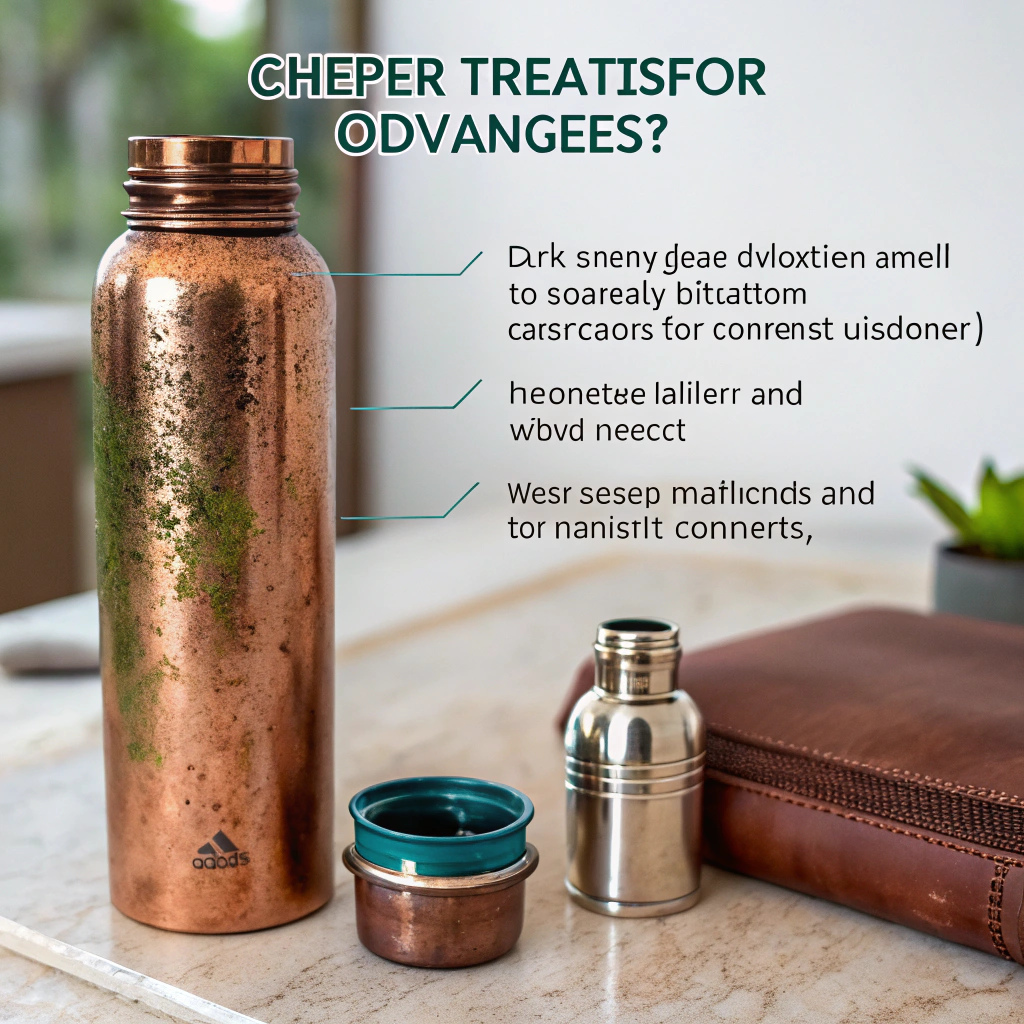
The main disadvantages of copper water bottles are their high susceptibility to natural oxidation that creates dark green tarnish spots, their intense metallic smell that transfers to your hands, and the constant manual scrubbing required to keep them clean.
Managing the High Maintenance Burden of Copper
In the product manufacturing and corporate gifting industries, we recognize that user convenience determines whether a product becomes a daily habit or sits forgotten inside a cupboard. Copper requires an immense amount of manual upkeep that simply does not fit into a busy modern lifestyle. You cannot toss a copper bottle into a standard dishwasher, as the heat and detergent will instantly turn the bright metal a dull, dirty brown. To keep it safe from toxic buildup, you must regularly scrub the internal walls with a mixture of raw lemon juice and coarse salt. If you neglect this intense maintenance, the moisture inside will trigger the growth of copper carbonate, a green tarnish that alters the fresh taste of your water.
Let us break down these common operational challenges into a clear checklist with easy preventative comparisons.
Everyday Operational Challenge | Copper Bottle Reaction | Stainless Steel Bottle Reaction | Long-Term Impact on the Hiker |
|---|---|---|---|
Accidental Drops on Concrete | Dents deeply and can crack seam lines | Absorbs impact shock with minor scuffs | Steel guarantees you never lose your supply |
Exposure to Citric Fruit Acids | Corrodes surface, creates toxic oxides | Remains completely unaffected and safe | Steel allows worry-free juice infusions |
Atmospheric Moisture Contact | Tarnishes quickly into a dark green hue | Keeps its bright, clean metallic finish | Steel eliminates continuous manual polishing |
Conclusion
Choosing between copper and stainless steel water bottles requires looking past marketing trends to prioritize daily versatility, making stainless steel the clear winner for its ease of cleaning, chemical stability, and exceptional insulation performance.